Comparing Infotainment Systems in New Cars
A detailed comparison of the latest infotainment systems found in new automotive models.
A detailed comparison of the latest infotainment systems found in new automotive models.
Comparing Infotainment Systems in New Cars
The Evolution of In Car Infotainment Systems From Basic Radios to Digital Cockpits
Remember the good old days when a car's 'infotainment system' was just a radio and maybe a cassette player? Fast forward to today, and we're talking about sophisticated digital cockpits that integrate navigation, communication, entertainment, and even vehicle controls into one seamless experience. Modern infotainment systems are no longer just a luxury; they're a crucial part of the driving experience, influencing everything from convenience to safety. As technology advances at lightning speed, car manufacturers are constantly pushing the boundaries, offering systems that are more intuitive, more connected, and more personalized than ever before. But with so many options out there, how do you choose the best one for your needs? Let's dive deep into what makes a great infotainment system and compare some of the leading contenders in the market.
Key Features to Look For in Modern Car Infotainment Systems Connectivity and User Experience
When you're evaluating an infotainment system, several key features stand out. First and foremost is connectivity. We're talking about seamless integration with your smartphone, usually through Apple CarPlay and Android Auto. These aren't just nice-to-haves anymore; they're essential for accessing your apps, messages, and music safely on the go. Beyond that, look for built-in Wi-Fi hotspots, Bluetooth connectivity, and USB ports for charging and data transfer. Over-the-air (OTA) updates are also becoming increasingly important, ensuring your system stays current with the latest features and security patches without a trip to the dealership.
User experience (UX) is another critical factor. An infotainment system should be intuitive and easy to use, minimizing distractions while driving. This means a responsive touchscreen, clear graphics, and logical menu structures. Voice control is also a huge plus, allowing you to manage various functions without taking your hands off the wheel. Physical buttons and knobs for essential functions like volume and climate control can also enhance usability, providing tactile feedback that touchscreens sometimes lack.
Navigation is another area where infotainment systems shine. While smartphone apps are great, integrated navigation often offers more robust features, such as real-time traffic updates, predictive routing, and even augmented reality overlays in some high-end systems. High-quality audio systems, often developed in partnership with premium audio brands like Bose, Harman Kardon, or Bang & Olufsen, can transform your driving experience into a concert hall on wheels. Finally, consider advanced features like customizable digital instrument clusters, multi-zone climate control integration, and even in-car gaming or video streaming for passengers.
Comparing Top Infotainment Systems Apple CarPlay vs Android Auto Integration and Beyond
Let's get into the nitty-gritty of some of the most popular infotainment systems available today. While many manufacturers develop their proprietary systems, almost all new cars offer Apple CarPlay and Android Auto compatibility, which are often the preferred choice for many drivers due to their familiarity and seamless smartphone integration.
Apple CarPlay The Intuitive Choice for iPhone Users
Apple CarPlay mirrors your iPhone's interface onto your car's display, providing access to Apple Maps, Apple Music, Messages, and a host of third-party apps like Spotify, Waze, and Google Maps. Its strength lies in its simplicity and familiarity for iPhone users. The interface is clean, intuitive, and designed for minimal distraction. Siri integration allows for hands-free control of calls, texts, and navigation. Wireless CarPlay is becoming more common, eliminating the need for a USB cable.
Android Auto The Versatile Platform for Android Devices
Similarly, Android Auto brings your Android phone's essential features to your car's screen. It offers Google Maps, Waze, Google Assistant, and a wide array of music and messaging apps. Android Auto is known for its robust voice control capabilities through Google Assistant, allowing for natural language commands. It also offers a customizable home screen with glanceable information. Like CarPlay, wireless Android Auto is gaining traction.
Proprietary Systems The Manufacturer's Unique Offerings
Beyond CarPlay and Android Auto, many manufacturers have invested heavily in their own infotainment systems, often offering unique features and deeper integration with vehicle functions.
Mercedes-Benz MBUX Hyperscreen A Glimpse into the Future
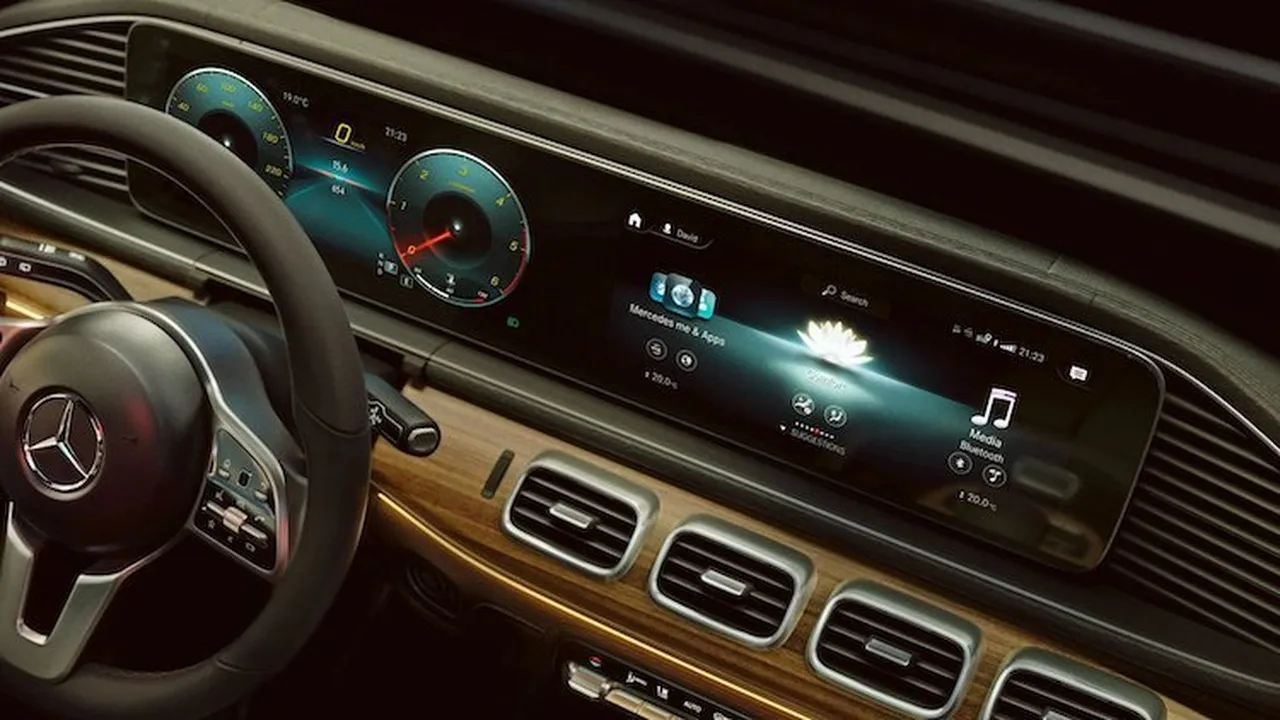
The Mercedes-Benz User Experience (MBUX) system, especially the Hyperscreen found in models like the EQS, is a technological marvel. It's a massive, curved screen unit that spans the entire dashboard, incorporating three separate displays for the driver, central infotainment, and front passenger. MBUX is known for its stunning graphics, intuitive voice control ('Hey Mercedes'), and augmented reality navigation. It learns your habits and offers personalized suggestions. The passenger display allows for separate entertainment, like streaming movies, without distracting the driver. While incredibly advanced, its complexity might require a learning curve for some users. Prices for Mercedes-Benz vehicles equipped with the Hyperscreen typically start in the high five figures to low six figures, depending on the model and trim.
BMW iDrive The Refined Rotary Controller and Touchscreen Blend
BMW's iDrive system has evolved significantly over the years. Modern iDrive systems, like the iDrive 8 found in newer BMWs, combine a large curved display with a tactile rotary controller on the center console. This dual input method offers flexibility, allowing drivers to choose between touch, voice, gesture control, or the physical controller. iDrive is praised for its responsiveness, crisp graphics, and deep integration with BMW's connected services. It also offers a highly customizable interface and advanced features like BMW Intelligent Personal Assistant. BMW models featuring iDrive 8, such as the i4 or X7, typically range from $50,000 to over $100,000.
Tesla Infotainment The Minimalist and Software Driven Approach
Tesla's infotainment system is perhaps the most distinctive, characterized by its massive central touchscreen (15-inch in Model 3/Y, 17-inch in Model S/X) that controls almost every aspect of the vehicle. Tesla's system is known for its minimalist design, over-the-air updates that constantly add new features and improvements, and unique entertainment options like Netflix, YouTube, and even video games when parked. The user interface is generally very responsive, and the navigation system is highly integrated with the car's Supercharger network. However, the reliance on a single screen for almost all functions can be a point of contention for some drivers who prefer physical buttons. Tesla vehicles range from around $40,000 for a Model 3 to over $100,000 for a Model S Plaid.
Ford SYNC 4 The User Friendly and Connected Experience
Ford's SYNC 4 system offers a user-friendly interface with large, easy-to-read icons and a focus on connectivity. It features wireless Apple CarPlay and Android Auto, cloud-based connectivity for real-time traffic and weather, and enhanced voice recognition. SYNC 4 is designed to be intuitive and responsive, making it easy for drivers to access information and entertainment. It's available across a wide range of Ford vehicles, from the F-150 to the Mustang Mach-E, with prices varying significantly by model, generally starting from $30,000 upwards.
Hyundai Kia Genesis Infotainment The Feature Rich and Value Packed Option
The infotainment systems across the Hyundai, Kia, and Genesis brands have consistently received high praise for their user-friendliness, extensive features, and excellent value. They typically feature large touchscreens, crisp graphics, and intuitive menu layouts. Wireless Apple CarPlay and Android Auto are standard on many models, along with robust navigation and a suite of connected services. The voice recognition is generally very good, and the systems often include unique features like 'Quiet Mode' for rear passengers. Vehicles like the Hyundai Palisade, Kia Telluride, or Genesis GV70 offer these advanced systems, with prices typically ranging from $35,000 to $60,000.
Specific Product Recommendations and Use Cases Choosing the Right System for Your Driving Style
Now, let's talk about specific recommendations based on different use cases and driving styles.
For the Tech Enthusiast and Early Adopter Mercedes-Benz MBUX Hyperscreen
If you love cutting-edge technology, stunning visuals, and a truly immersive digital experience, the Mercedes-Benz MBUX Hyperscreen is unparalleled. It's perfect for those who want their car to feel like a spaceship, with advanced AI voice control and a passenger display for co-pilot entertainment. Use Case: Long road trips with passengers who appreciate individual entertainment, or daily commutes where you want the most advanced tech at your fingertips. Price Range: Found in high-end Mercedes-Benz models like the EQS (starting around $104,400) and EQE (starting around $74,900).
For the Balanced Driver Who Values Both Touch and Tactile Controls BMW iDrive
If you appreciate a blend of modern touchscreen functionality with the precision of a physical rotary controller, BMW's iDrive system is an excellent choice. It offers a highly customizable and responsive interface without forcing you to rely solely on touch. Use Case: Drivers who navigate complex menus frequently but also want quick, tactile access to essential functions like volume or map zoom. Ideal for both city driving and spirited drives where minimal distraction is key. Price Range: Available in most new BMW models, such as the 3 Series (starting around $44,500) to the X5 (starting around $65,200).
For the Minimalist and Software Focused Driver Tesla Infotainment
If you prefer a clean, minimalist interior and appreciate a car that constantly evolves through software updates, Tesla's system is for you. It's a tablet on wheels, offering a unique blend of vehicle control and entertainment. Use Case: Drivers who are comfortable with a digital-first approach and enjoy the novelty of in-car streaming and gaming. Great for tech-savvy individuals who want a car that feels like a giant smartphone. Price Range: Tesla Model 3 (starting around $40,240) to Model S (starting around $74,990).
For the Practical and Connected Commuter Ford SYNC 4 or Hyundai Kia Genesis Systems
If you prioritize seamless smartphone integration, ease of use, and robust connectivity without breaking the bank, Ford SYNC 4 or the Hyundai/Kia/Genesis systems are fantastic options. They offer wireless CarPlay/Android Auto and intuitive interfaces. Use Case: Daily commuters who rely heavily on smartphone apps for navigation and music, and families who need a reliable and user-friendly system for everyday driving. Price Range: Ford F-150 (starting around $36,570), Hyundai Elantra (starting around $21,600), Kia Seltos (starting around $24,490).
Future Trends in Automotive Infotainment Augmented Reality and Personalization
The future of automotive infotainment is incredibly exciting. We're already seeing glimpses of what's to come, with augmented reality (AR) navigation systems becoming more prevalent. These systems overlay navigation directions directly onto a live camera feed of the road ahead, making it incredibly easy to follow turns and identify landmarks. Mercedes-Benz and Audi are already implementing impressive AR features.
Personalization will also reach new heights. Infotainment systems will increasingly use AI to learn individual driver preferences, adjusting everything from seat position and climate control to music playlists and navigation routes based on who is behind the wheel. Biometric authentication, such as fingerprint or facial recognition, could soon be used to automatically load personalized profiles.
Integration with smart home devices is another area of growth. Imagine being able to control your home's lighting or thermostat directly from your car's infotainment system. Furthermore, the rise of 5G connectivity will enable even faster data transfer, supporting more sophisticated cloud-based services, real-time data processing, and high-quality streaming experiences for all occupants.
The line between the car and our digital lives will continue to blur, making our vehicles not just modes of transport, but extensions of our connected ecosystems. As these systems become more advanced, the focus will remain on ensuring they enhance safety and convenience, rather than becoming a source of distraction. The journey of automotive infotainment is far from over, and we can expect even more groundbreaking innovations in the years to come.
:max_bytes(150000):strip_icc()/277019-baked-pork-chops-with-cream-of-mushroom-soup-DDMFS-beauty-4x3-BG-7505-5762b731cf30447d9cbbbbbf387beafa.jpg)