Future of In Car Biometric Authentication
Explore the potential and implications of biometric authentication systems in future vehicles.
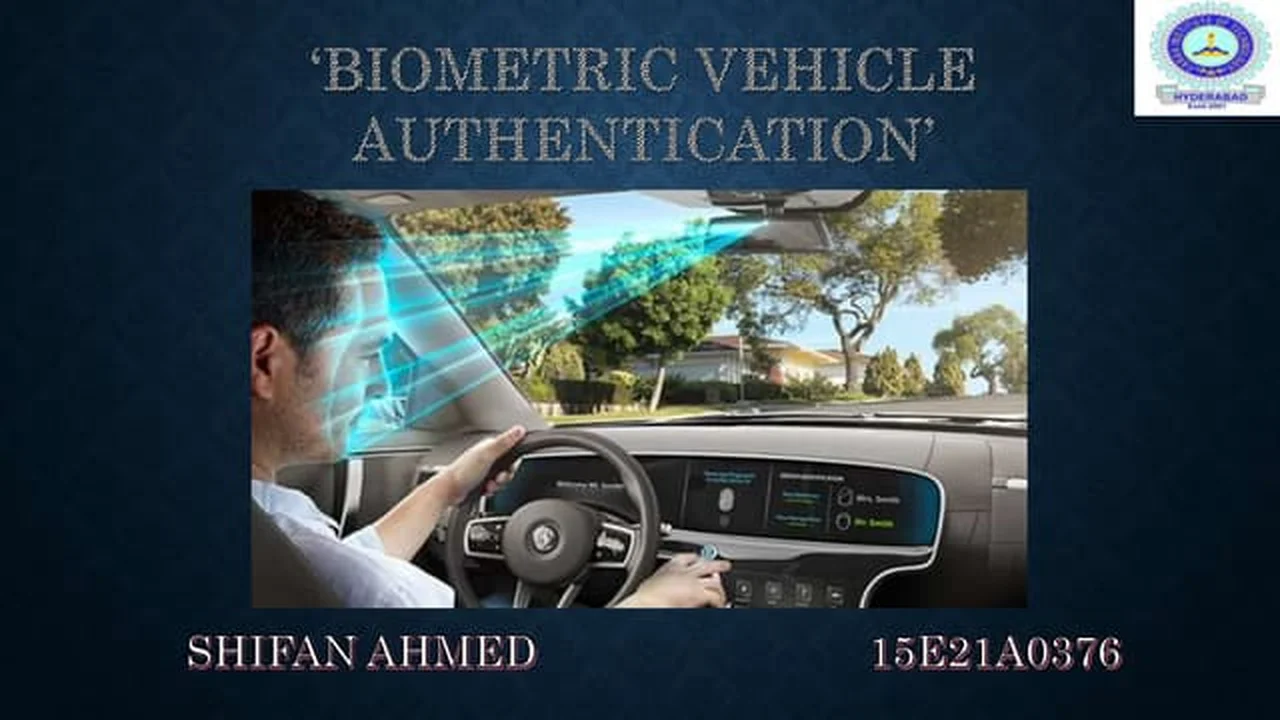
Explore the potential and implications of biometric authentication systems in future vehicles.
Future of In Car Biometric Authentication
Hey there, ever thought about your car recognizing you just by your face or fingerprint? It sounds like something out of a sci-fi movie, right? But guess what, in-car biometric authentication is rapidly moving from futuristic concept to everyday reality. We're talking about a whole new level of convenience, security, and personalization for your driving experience. Forget fumbling for keys or remembering complex PINs; your unique biological traits are becoming the ultimate access pass to your ride. Let's dive deep into what this technology entails, how it's shaping up, and what it means for you as a driver.
What is In Car Biometric Authentication and Why Does it Matter for Automotive Security?
At its core, biometric authentication uses your unique biological characteristics to verify your identity. In the context of cars, this means using things like your fingerprint, facial features, iris patterns, or even your voice to unlock doors, start the engine, and access personalized settings. Why is this such a big deal? Well, for starters, it significantly boosts security. Traditional car keys can be lost, stolen, or duplicated. PINs can be forgotten or guessed. Biometrics, however, are much harder to compromise. Your fingerprint is yours alone, and your face is a complex map of unique identifiers. This makes your car much more resistant to theft and unauthorized access.
Beyond security, biometrics offer unparalleled convenience. Imagine walking up to your car, and it unlocks as soon as it recognizes your face. Or sitting down, pressing a start button, and your fingerprint instantly fires up the engine and adjusts your seat, mirrors, and infotainment preferences. It's about making the interaction with your vehicle seamless and intuitive. This technology is not just about getting into your car; it's about creating a personalized driving environment tailored specifically for you, every single time.
Types of Biometric Authentication Systems for Vehicles: Fingerprint Face and Voice Recognition
When we talk about in-car biometrics, several technologies are leading the charge. Each has its own strengths and potential applications:
Fingerprint Recognition in Cars: Security and Convenience at Your Fingertips
Fingerprint scanners are perhaps the most common and well-understood form of biometric authentication. You've probably used them on your smartphone or laptop. In cars, they can be integrated into door handles, steering wheels, or the start button. The technology works by scanning the unique ridges and valleys of your fingerprint and comparing it to a stored template. If there's a match, access is granted.
Pros: Highly secure, relatively inexpensive to implement, and widely accepted by consumers. It's also quite fast and discreet.
Cons: Can be affected by dirt, moisture, or cuts on the finger. Some people might find it less convenient than passive methods like facial recognition.
Example Products and Use Cases:
- Hyundai's Santa Fe: This SUV was one of the first to offer fingerprint authentication for unlocking doors and starting the engine. The system allows multiple users to register their fingerprints, each linked to personalized settings for seats, mirrors, and infotainment. This means if you and your partner both drive the car, it automatically adjusts to your preferences when you get in.
- Genesis GV70: Another Korean automaker, Genesis, has also incorporated fingerprint authentication, primarily for starting the engine and enabling valet mode. This adds an extra layer of security, ensuring only authorized drivers can operate the vehicle.
- Aftermarket Solutions: While less common for full vehicle access, some aftermarket security systems offer fingerprint-based immobilizers, preventing the engine from starting without a verified print. These typically range from $150 to $500, depending on complexity and installation.
Facial Recognition in Automotive: Seamless Access and Personalized Driving Experience
Facial recognition uses cameras to map your unique facial features. This data is then compared to a stored profile. If there's a match, the car unlocks, starts, and adjusts settings. This is often seen as the most seamless and hands-free method.
Pros: Extremely convenient and passive; you don't need to do anything other than look at the camera. Can also be used for driver monitoring to detect fatigue or distraction.
Cons: Can be affected by lighting conditions, sunglasses, or masks. Privacy concerns are often raised with facial recognition technology.
Example Products and Use Cases:
- Cadillac Lyriq: While not for full vehicle access yet, the Lyriq's Super Cruise system uses a driver-facing camera for facial recognition to ensure the driver is paying attention while the semi-autonomous system is engaged. This is a crucial safety feature that could easily be expanded to full authentication.
- Subaru Forester (DriverFocus Distraction Mitigation System): This system uses facial recognition to monitor driver attention and can issue warnings if it detects distraction or drowsiness. While not for authentication, it demonstrates the capability of in-car facial recognition.
- Mercedes-Benz MBUX Interior Assistant: This system uses gesture control and can recognize hand movements and even the driver's gaze. While not strictly facial authentication for access, it shows how advanced camera systems are being used to understand and respond to the driver.
- Future Concepts: Many concept cars from manufacturers like BMW and Audi showcase facial recognition for unlocking doors and personalizing settings as you approach the vehicle. The cost for such integrated systems in production cars would be part of the overall vehicle price, likely adding a premium of $500-$1500 for advanced biometric packages.
Voice Recognition for Car Control: Beyond Simple Commands to Secure Authentication
Voice recognition has been in cars for a while, primarily for controlling infotainment or navigation. However, advanced voice biometrics can analyze the unique characteristics of your voice – pitch, tone, cadence – to authenticate your identity. This goes beyond simply recognizing what you say to recognizing who is saying it.
Pros: Hands-free and eyes-free operation, which is great for driving safety. Can be integrated with existing voice assistant systems.
Cons: Can be affected by background noise, illness, or voice impersonation attempts (though advanced systems are very good at detecting these). Training the system can take time.
Example Products and Use Cases:
- Nuance Communications (Dragon Drive): Nuance is a leading provider of automotive voice recognition technology. While their current systems focus on command and control, they are actively developing and integrating voice biometrics for authentication purposes, such as authorizing payments for fuel or parking directly from the car.
- Amazon Alexa and Google Assistant Integration: As these AI assistants become more deeply integrated into vehicles, the potential for voice-based authentication for various services (e.g., making secure purchases, accessing sensitive information) grows. While not directly for car access yet, the infrastructure is being built.
- Future Applications: Imagine saying 'Start my car' and the vehicle not only recognizes the command but also verifies it's *your* voice, then starts the engine. This could also be used for authorizing in-car purchases or accessing secure vehicle data. The cost for advanced voice biometric modules would likely be integrated into premium infotainment packages, potentially adding $300-$800.
Comparing Biometric Authentication Technologies: Which is Best for Your Driving Needs?
Each biometric method has its sweet spot. Fingerprint recognition is robust and widely accepted, offering a good balance of security and convenience. Facial recognition provides the most seamless, hands-free experience, ideal for quick access and personalization. Voice recognition, while still evolving for primary authentication, holds immense potential for hands-free control and secure in-car transactions.
Many manufacturers are exploring a multi-modal approach, combining two or more biometrics for enhanced security and flexibility. For instance, you might use facial recognition to unlock the car, but a fingerprint scan to start the engine or authorize a payment. This layered security approach offers the best of all worlds.
Benefits of In Car Biometric Systems: Enhanced Security Personalization and Convenience
The advantages of integrating biometrics into our cars are numerous and compelling:
- Unmatched Security: As mentioned, biometrics are incredibly difficult to replicate, making your car much more secure against theft and unauthorized use. This could even lead to lower insurance premiums in the future.
- Ultimate Convenience: No more fumbling for keys, no more remembering PINs. Your car recognizes you instantly, making every interaction effortless.
- Deep Personalization: Imagine your car automatically adjusting your seat, mirrors, climate control, infotainment preferences, and even driving mode the moment you get in. Biometrics enable a truly personalized driving experience for multiple drivers.
- Seamless Payments: Future applications could include authorizing fuel purchases, toll payments, or even drive-thru orders with a simple fingerprint or voice command, securely linked to your payment methods.
- Driver Monitoring and Safety: Facial recognition can monitor driver alertness, detecting fatigue or distraction and issuing warnings, thereby enhancing road safety.
- Valet Mode and Guest Access: Easily grant temporary access to valets or service technicians with limited permissions, ensuring your personal settings and data remain private.
Challenges and Considerations for Biometric Car Systems: Privacy Data Security and Reliability
While the future of in-car biometrics looks bright, there are important challenges to address:
- Privacy Concerns: Storing biometric data raises significant privacy questions. Who owns this data? How is it protected? Can it be shared with third parties? Robust regulations and transparent data handling policies are crucial.
- Data Security: Biometric templates must be stored securely and encrypted to prevent breaches. A compromised biometric database could have severe consequences.
- Reliability in Diverse Conditions: Biometric systems need to perform flawlessly in all conditions – varying light, extreme temperatures, different user appearances (e.g., with glasses, hats, or masks).
- Cost of Implementation: Integrating advanced biometric systems can add to the overall cost of the vehicle, potentially making it less accessible to some consumers.
- User Acceptance: While many are comfortable with fingerprint scanners, facial and voice recognition might face more skepticism due to privacy concerns.
- False Positives/Negatives: While rare, the possibility of a system failing to recognize an authorized user (false negative) or incorrectly identifying an unauthorized user (false positive) needs to be minimized.
The Future Outlook for In Car Biometrics: Integration with Smart Homes and Beyond
The trajectory for in-car biometrics is one of increasing integration and sophistication. We're likely to see these systems become standard features in premium vehicles first, then trickle down to more mainstream models. The ultimate vision is a seamless ecosystem where your car, home, and personal devices are all connected and secured by your unique biometrics.
Imagine your car recognizing you, unlocking the garage door, and turning on your home lights as you approach. Or using your car's biometric system to authorize a package delivery to your trunk. The possibilities are vast and exciting. As technology advances, we can expect even more sophisticated biometrics, such as iris scanning or even gait analysis, to find their way into our vehicles, further enhancing security and personalization.
The automotive industry is on the cusp of a biometric revolution. While challenges remain, the benefits of enhanced security, unparalleled convenience, and deep personalization are too significant to ignore. Get ready for a future where your car knows you better than anyone else, making every drive a truly unique and effortless experience.
:max_bytes(150000):strip_icc()/277019-baked-pork-chops-with-cream-of-mushroom-soup-DDMFS-beauty-4x3-BG-7505-5762b731cf30447d9cbbbbbf387beafa.jpg)