An overview of the current processes and future outlook for electric vehicle battery recycling.
An overview of the current processes and future outlook for electric vehicle battery recycling.
Understanding EV Battery Recycling Processes
The Growing Need for EV Battery Recycling Solutions
Hey everyone! Let's talk about something super important for the future of electric vehicles: battery recycling. As more and more EVs hit the roads in the US and Southeast Asia, we're going to have a lot of batteries reaching their end-of-life. What happens then? Just tossing them in a landfill isn't an option, not just because it's bad for the environment, but also because these batteries contain valuable materials that we can reuse. Think about it – lithium, cobalt, nickel, manganese… these aren't just lying around everywhere. Recycling them helps us reduce our reliance on new mining, which is a win for sustainability and supply chain stability. Plus, it's a huge step towards a truly circular economy for electric vehicles. We're not just talking about cars here; electric bikes, scooters, and even grid-scale energy storage systems all use similar battery tech, so the scale of this challenge and opportunity is massive.
Current EV Battery Recycling Technologies and Methods
So, how do we actually recycle these complex EV batteries? It's not as simple as throwing a soda can into a recycling bin. There are a few main methods, each with its own pros and cons. Let's break them down:
Pyrometallurgy: The Heat Treatment Approach for Battery Materials
First up, we have pyrometallurgy. This is basically a fancy word for using high heat to recover metals. Imagine a giant furnace where batteries are melted down. The organic components, like plastics and electrolytes, burn off, and the metals separate based on their density. This method is pretty good at recovering cobalt and nickel, which are high-value metals. However, it's not so great for lithium, which often gets lost in the slag. Plus, burning off those organic materials can release greenhouse gases if not properly managed, and it's quite energy-intensive. It's a well-established technology, often used for other metal recycling, but it's not the most efficient for all battery components.
Hydrometallurgy: Chemical Leaching for Valuable Metals Recovery
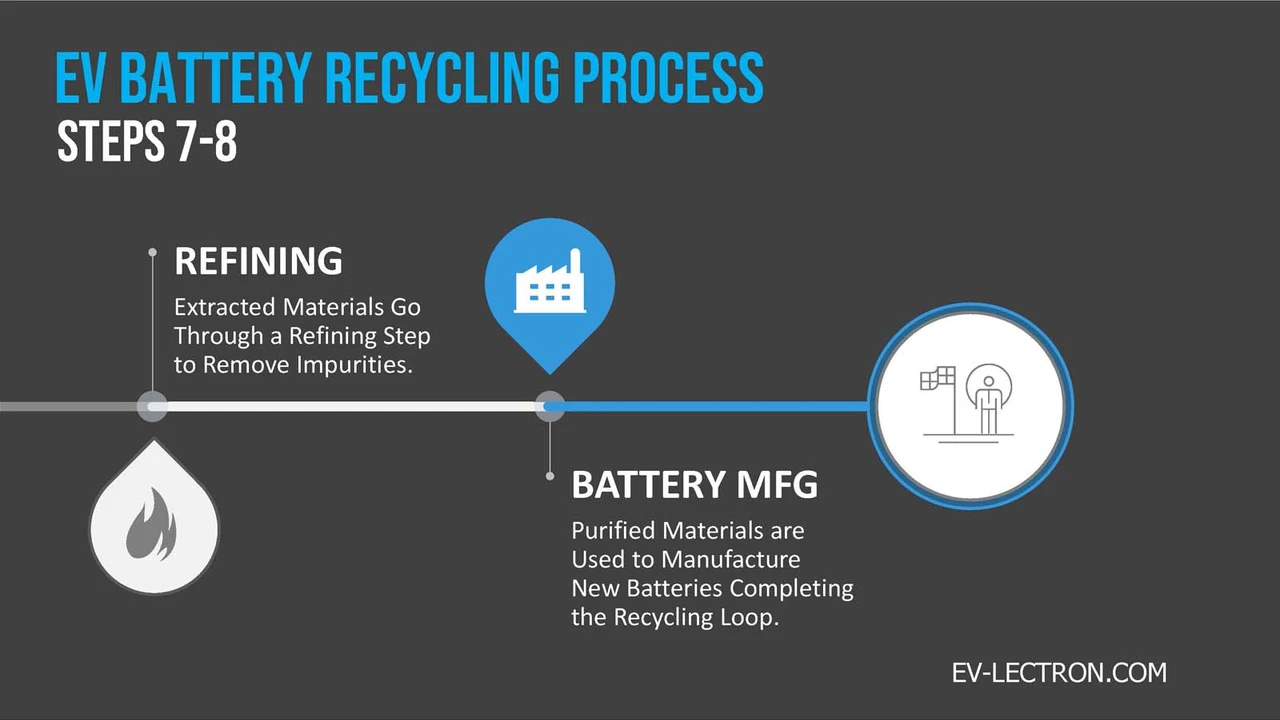
Next, we have hydrometallurgy. This approach uses chemical solutions to leach out the valuable metals from the battery materials. Think of it like a chemical bath that dissolves the metals. This method is generally more efficient at recovering a wider range of materials, including lithium, and it's less energy-intensive than pyrometallurgy. The downside is that it generates a lot of wastewater, which needs to be treated carefully. It also requires precise control over the chemical processes to ensure high purity of the recovered materials. Many newer recycling facilities are leaning towards hydrometallurgy because of its higher recovery rates for critical materials.
Direct Recycling: Preserving Cathode Structure for Reuse
Then there's direct recycling, which is arguably the holy grail of battery recycling. Instead of breaking down the materials into their elemental components, direct recycling aims to preserve the cathode and anode structures. This means less energy is used, and the materials can be reused with minimal processing. It's like taking apart a LEGO set and putting it back together, rather than melting all the bricks down and remolding them. The challenge here is that batteries come in all shapes and sizes, with different chemistries, and they degrade differently. So, sorting and preparing them for direct recycling is a complex task. But if we can perfect this, it would be the most environmentally friendly and economically efficient method.
Key Players and Innovative Companies in EV Battery Recycling
So, who's actually doing this? There are some really exciting companies making big strides in EV battery recycling. Let's look at a few:
Redwood Materials, founded by Tesla co-founder JB Straubel, is a big name in the US. They're focused on creating a closed-loop supply chain for batteries. They collect end-of-life batteries and manufacturing scrap, then process them to recover critical materials like lithium, nickel, cobalt, and copper. Their goal is to re-manufacture these materials into new battery components, reducing the need for virgin materials. They're building massive facilities in the US, aiming to process enough materials to produce millions of new EV battery packs annually. Their approach combines elements of both hydrometallurgy and proprietary processes to achieve high recovery rates. They even partner with companies like Ford and Volvo to collect their end-of-life batteries.
Li-Cycle: Spoke and Hub Model for Efficient Battery Processing
Li-Cycle is another major player, known for its 'Spoke & Hub' model. Their 'Spokes' are smaller facilities located closer to battery sources, where they mechanically shred and process batteries into a material called 'black mass.' This black mass, which contains the valuable metals, is then shipped to larger 'Hub' facilities for hydrometallurgical refining. This distributed approach helps reduce transportation costs and risks associated with shipping intact batteries. Li-Cycle has operations in North America and is expanding globally, including potential ventures in Southeast Asia. They boast impressive recovery rates for lithium, nickel, and cobalt, making them a strong contender in the recycling space.
Umicore: Global Leader in Battery Recycling and Materials
Umicore, a Belgian multinational, has been a leader in materials technology and recycling for a long time, including battery recycling. They operate globally and have significant expertise in pyrometallurgical and hydrometallurgical processes. They're not just recycling EV batteries but also other types of rechargeable batteries. Umicore focuses on recovering a wide range of metals and reintroducing them into the supply chain for new battery production. Their long-standing experience in materials science gives them a strong edge in developing efficient and sustainable recycling solutions.
SungEel HiTech: South Korean Innovator in Battery Recycling
In Southeast Asia and beyond, SungEel HiTech from South Korea is a prominent name. They specialize in hydrometallurgical recycling of lithium-ion batteries, recovering cobalt, nickel, lithium, and copper. They have a strong focus on environmental responsibility and are expanding their capacity to meet the growing demand for battery recycling in the region. Their technology allows for high purity recovery, which is crucial for re-using these materials in new battery manufacturing. They are a key player in establishing a circular economy for batteries in Asia.
Other Emerging Players and Regional Initiatives
Beyond these big names, there are many other companies and initiatives popping up. For example, in Southeast Asia, countries like Thailand and Indonesia are starting to invest in their own battery recycling infrastructure, often in partnership with global players or developing local solutions. Companies like TES in Singapore are also involved in e-waste recycling, which includes some battery components. The landscape is constantly evolving, with new startups and research institutions exploring even more efficient and sustainable ways to recycle EV batteries.
Challenges and Opportunities in EV Battery Recycling
It's not all smooth sailing, though. There are definitely some hurdles we need to overcome to make EV battery recycling truly mainstream and efficient.
Logistical Complexities of Battery Collection and Transportation
One of the biggest challenges is logistics. EV batteries are large, heavy, and can be dangerous if not handled correctly. Collecting them from various sources – end-of-life vehicles, manufacturing scrap, warranty returns – and transporting them safely to recycling facilities is a complex task. We need robust collection networks and specialized transportation methods. This is especially true in geographically diverse regions like Southeast Asia, where infrastructure might vary.
Diverse Battery Chemistries and Designs
Another issue is the sheer variety of battery chemistries and designs. There's no one-size-fits-all recycling solution. Different manufacturers use different materials and pack their batteries in different ways. This makes it difficult to standardize recycling processes. As battery technology continues to evolve, recyclers need to constantly adapt their methods, which requires significant investment in R&D.
Economic Viability and Material Value Fluctuations
Then there's the economic side. The profitability of recycling depends heavily on the market prices of the recovered materials. If the price of lithium or cobalt drops significantly, it can make recycling less economically attractive compared to mining new materials. Governments and industry need to work together to create policies and incentives that ensure recycling remains economically viable, regardless of market fluctuations.
Regulatory Frameworks and Policy Support
Speaking of policies, robust regulatory frameworks are crucial. Governments in the US and Southeast Asia need to establish clear guidelines for battery collection, transportation, and recycling. This includes mandates for recycling, incentives for companies to use recycled materials, and funding for research and development in recycling technologies. Strong policies can create a level playing field and drive investment in the recycling sector.
The Future Outlook for EV Battery Recycling
Despite the challenges, the future of EV battery recycling looks incredibly promising. We're seeing rapid advancements and increasing commitment from governments and industry.
Advancements in Recycling Technologies
Research and development are constantly pushing the boundaries. We're seeing innovations in direct recycling, more efficient hydrometallurgical processes, and even new methods like bio-leaching, which uses microorganisms to extract metals. These advancements will lead to higher recovery rates, lower environmental impact, and more cost-effective recycling solutions.
Increased Investment and Infrastructure Development
There's a growing understanding that battery recycling is not just an environmental necessity but also an economic opportunity. This is leading to significant investment in new recycling facilities and infrastructure, both in established markets like the US and emerging markets in Southeast Asia. We'll see more 'gigafactories' for recycling, mirroring the gigafactories for battery production.
Circular Economy Integration and Sustainable Supply Chains
Ultimately, the goal is to fully integrate battery recycling into a circular economy. This means designing batteries with recycling in mind from the very beginning, establishing efficient collection and sorting systems, and ensuring that the recovered materials are seamlessly fed back into the production of new batteries. This will create truly sustainable supply chains for electric vehicles, reducing our environmental footprint and ensuring a secure supply of critical materials for generations to come.
So, while there's still work to be done, the progress in EV battery recycling is exciting. It's a critical piece of the puzzle for a sustainable electric future, and it's something we should all be paying attention to as the automotive world continues its electric transformation.
:max_bytes(150000):strip_icc()/277019-baked-pork-chops-with-cream-of-mushroom-soup-DDMFS-beauty-4x3-BG-7505-5762b731cf30447d9cbbbbbf387beafa.jpg)