3D Printing Applications in Automotive Industry
Discover how 3D printing is being utilized in various aspects of the automotive industry.
Discover how 3D printing is being utilized in various aspects of the automotive industry.
3D Printing Applications in Automotive Industry
Hey there, car enthusiasts and tech geeks! Ever wondered how those sleek, futuristic car designs go from a designer's imagination to a tangible prototype, or even a final part? Well, a huge part of that magic is thanks to 3D printing, also known as additive manufacturing. This isn't just some niche technology anymore; it's revolutionizing the automotive industry from top to bottom, impacting everything from design and prototyping to manufacturing and even aftermarket parts. Let's dive deep into how 3D printing is changing the game for cars, trucks, and everything in between, especially with an eye on the US and Southeast Asian markets.
Rapid Prototyping and Design Iteration in Automotive Manufacturing
One of the biggest game-changers 3D printing brings to the automotive table is rapid prototyping. Think about it: traditionally, creating a prototype for a new car part could take weeks or even months, involving complex tooling and skilled craftsmanship. With 3D printing, designers can go from a digital model to a physical object in a matter of hours or days. This speed allows for incredibly fast design iteration. Engineers can print multiple versions of a part, test them, tweak the design, and print again, all within a fraction of the time it used to take. This accelerates the development cycle significantly, bringing new models and features to market much faster.
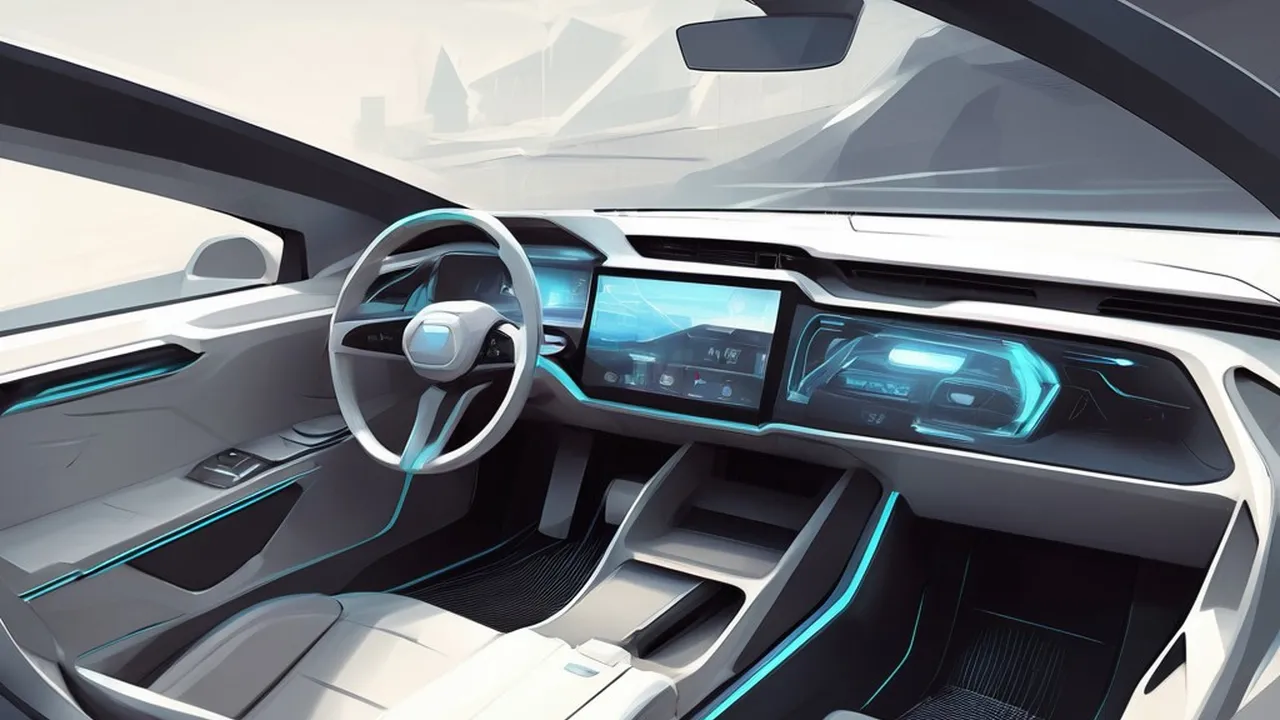
For example, let's say a design team is working on a new dashboard layout. They can 3D print different versions of the air vents, button clusters, or even the entire dashboard section. This allows them to physically interact with the designs, check ergonomics, and get a real feel for the aesthetics before committing to expensive production tooling. This is a massive advantage for companies looking to stay competitive in fast-moving markets like the US, where consumer preferences can shift quickly, and in emerging markets in Southeast Asia, where localized designs are often crucial.
Tooling Jigs and Fixtures for Efficient Production
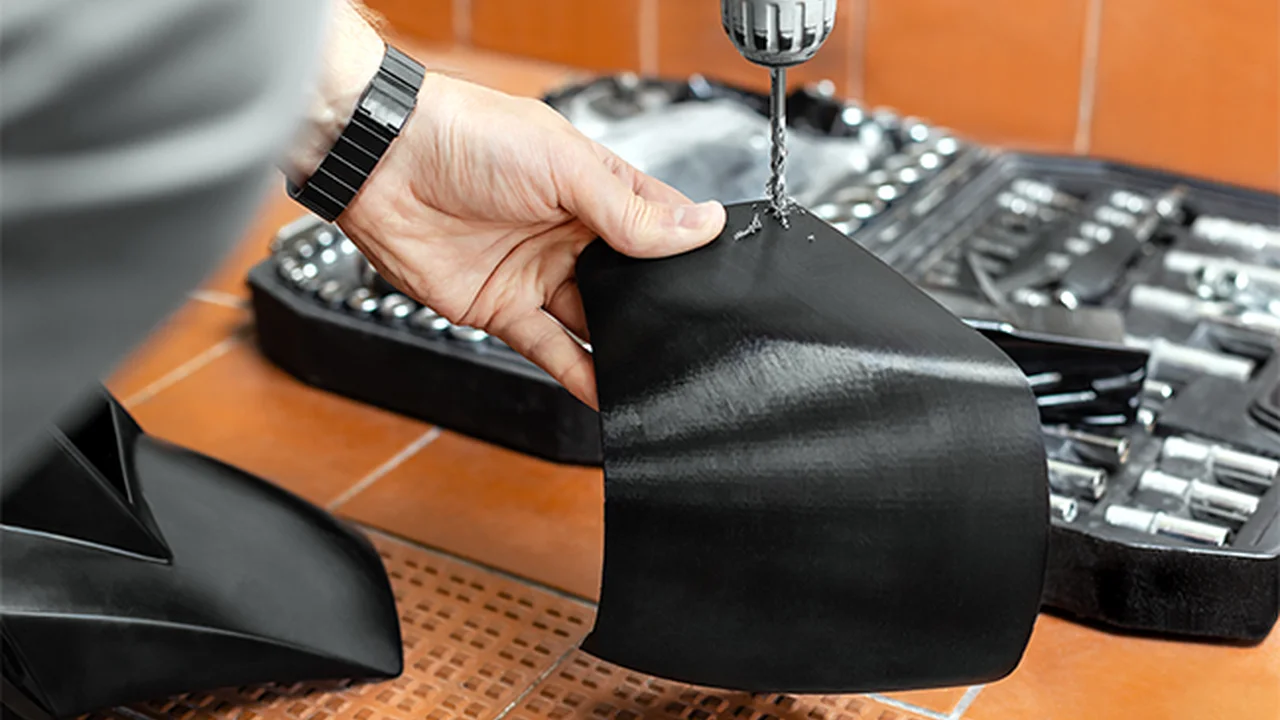
Beyond prototypes, 3D printing is also making a huge impact on the factory floor itself, specifically in the creation of tooling, jigs, and fixtures. These are the custom tools and guides that workers use to assemble parts accurately and efficiently. Traditionally, these would be machined from metal, which is a time-consuming and costly process. With 3D printing, manufacturers can create custom jigs and fixtures on demand, often at a fraction of the cost and time.
Imagine an assembly line where a specific bracket needs to be held at a precise angle for welding. A 3D-printed jig can be designed and produced overnight, perfectly tailored for that specific task. This not only speeds up production but also improves accuracy and reduces the risk of errors. Companies like Ford and BMW have been pioneers in using 3D-printed tools, reporting significant cost savings and efficiency gains. This is particularly beneficial for smaller production runs or specialized vehicle variants, where traditional tooling costs would be prohibitive. In Southeast Asia, where manufacturing flexibility and cost-effectiveness are key, this application of 3D printing can be a real boon for local automotive players.
Customization and Personalization in Vehicle Design
One of the most exciting frontiers for 3D printing in automotive is customization and personalization. Consumers, especially in markets like the US, are increasingly looking for unique vehicles that reflect their personality. 3D printing makes it possible to create bespoke parts and accessories that would be impossible or too expensive to produce with traditional methods.
Think about custom interior trim pieces, personalized gear shift knobs, or even unique exterior badges. Imagine a customer ordering a car and being able to choose from a catalog of 3D-printed interior accents, perhaps with their initials or a custom pattern. This level of personalization can create a much stronger connection between the owner and their vehicle. While full-scale mass customization is still evolving, we're already seeing examples of 3D-printed components in limited edition models or as optional extras. For instance, MINI has offered 3D-printed personalized side scuttles and dashboard trims, allowing owners to add a unique touch to their cars. This trend is likely to grow, offering new revenue streams for manufacturers and a more engaging experience for consumers.
Lightweighting and Performance Enhancement with Advanced Materials
Weight is the enemy of performance and fuel efficiency. Every gram saved contributes to better acceleration, handling, and reduced emissions. 3D printing, especially with advanced materials like carbon fiber composites and specialized alloys, allows engineers to create complex geometries that are incredibly strong yet remarkably light. This is known as 'lightweighting'.
Traditional manufacturing methods often have limitations on the complexity of shapes they can produce. 3D printing, however, can create intricate lattice structures and internal channels that optimize material usage, resulting in parts that are lighter than their conventionally manufactured counterparts but just as strong, if not stronger. For example, companies are exploring 3D printing for components like brake calipers, suspension parts, and even engine components. Porsche has successfully 3D printed pistons for its 911 GT2 RS, resulting in a 10% weight reduction and a performance boost. This is a huge deal for high-performance vehicles and also for electric vehicles, where every bit of weight reduction translates to increased range. As material science advances, we'll see even more critical, load-bearing parts being 3D printed, pushing the boundaries of automotive engineering.
Spare Parts and On-Demand Manufacturing for Supply Chain Resilience
The automotive supply chain is incredibly complex, and disruptions can lead to significant delays and costs. 3D printing offers a compelling solution for spare parts and on-demand manufacturing, especially for older or less common vehicle models. Instead of stocking vast inventories of every single part, manufacturers can store digital files and print parts only when they are needed.
This 'digital inventory' approach reduces warehousing costs, minimizes waste, and ensures that even obscure parts can be produced quickly. Imagine a classic car owner in the US needing a specific, out-of-production plastic trim piece. Instead of scouring junkyards, they could potentially have it 3D printed. This also has significant implications for markets in Southeast Asia, where access to certain spare parts might be challenging due to import restrictions or logistical hurdles. Localized 3D printing hubs could produce parts on demand, improving repair times and vehicle longevity. Companies like Daimler (Mercedes-Benz) are already using 3D printing for truck spare parts, demonstrating the viability and benefits of this approach.
Specific 3D Printing Technologies and Their Automotive Applications
When we talk about 3D printing, it's not just one technology. There are several different methods, each with its own strengths and ideal applications in the automotive world. Let's look at a few key ones:
FDM Fused Deposition Modeling for Prototyping and Tooling
FDM is probably the most common and recognizable form of 3D printing. It works by extruding a thermoplastic filament, layer by layer, to build up an object. It's relatively inexpensive and great for quick prototypes, jigs, and fixtures. You'll find FDM printers in design studios and on factory floors for rapid iteration.
- Recommended Product: Ultimaker S5
- Use Case: Creating functional prototypes of interior components like dashboard buttons or air vents, or printing custom jigs for assembly line workers.
- Comparison: More affordable and easier to use than industrial-grade printers, but parts might have visible layer lines and are generally not as strong as those from other methods.
- Estimated Price: Around $6,000 - $10,000 USD.
SLA Stereolithography for High Detail and Smooth Finishes
SLA uses a UV laser to cure liquid resin, creating incredibly detailed parts with very smooth surfaces. This is perfect for aesthetic prototypes, intricate design elements, and master patterns for molding processes.
- Recommended Product: Formlabs Form 3+
- Use Case: Producing highly detailed exterior trim pieces for design review, intricate headlight housings, or small, complex internal components where precision is key.
- Comparison: Offers superior surface finish and detail compared to FDM, but materials can be more brittle and require post-processing (washing and UV curing).
- Estimated Price: Around $3,500 - $5,000 USD.
SLS Selective Laser Sintering for Strong Functional Parts
SLS uses a laser to fuse powdered material (often nylon or other polymers) layer by layer. It produces strong, functional parts with good mechanical properties, making it suitable for end-use components and complex geometries.
- Recommended Product: EOS P 396 (Industrial Grade)
- Use Case: Manufacturing functional end-use parts like complex air intake manifolds, custom brackets, or lightweight structural components for racing applications.
- Comparison: Produces very strong and durable parts with excellent mechanical properties, no support structures needed (powder acts as support), but machines are significantly more expensive and require specialized handling of powder.
- Estimated Price: $200,000+ USD (industrial).
DMLS Direct Metal Laser Sintering for Metal Components
DMLS is a metal 3D printing process that uses a laser to fuse metal powder (like aluminum, titanium, or stainless steel). This allows for the creation of complex metal parts with high strength and heat resistance, ideal for critical engine components or lightweight structural elements.
- Recommended Product: Renishaw AM400 (Industrial Grade)
- Use Case: Producing lightweight brake calipers, optimized heat exchangers, custom exhaust components, or even functional engine parts like pistons (as Porsche did).
- Comparison: Creates incredibly strong, high-performance metal parts with complex geometries impossible with traditional machining, but it's a very expensive process with high material costs and specialized equipment.
- Estimated Price: $500,000+ USD (industrial).
Challenges and Future Outlook for 3D Printing in Automotive
While 3D printing offers incredible advantages, it's not without its challenges. Cost, especially for industrial-grade metal printers and specialized materials, can be a barrier. The speed of production, while fast for prototypes, is still generally slower than mass production techniques like injection molding for very high volumes. Material limitations also exist, though new automotive-grade materials are constantly being developed.
However, the future looks incredibly bright. As 3D printing technology continues to evolve, costs will come down, speeds will increase, and the range of printable materials will expand. We'll likely see more hybrid manufacturing approaches, where 3D printing is integrated with traditional methods to leverage the best of both worlds. The ability to create highly customized, lightweight, and complex parts on demand will continue to drive innovation in the automotive sector, leading to safer, more efficient, and more personalized vehicles for consumers in the US, Southeast Asia, and beyond. Keep an eye out for more 3D-printed components in your next car!
:max_bytes(150000):strip_icc()/277019-baked-pork-chops-with-cream-of-mushroom-soup-DDMFS-beauty-4x3-BG-7505-5762b731cf30447d9cbbbbbf387beafa.jpg)