5 Tips for Buying a Used Car Safely
Discover five crucial tips for safely purchasing a used car and avoiding common pitfalls.
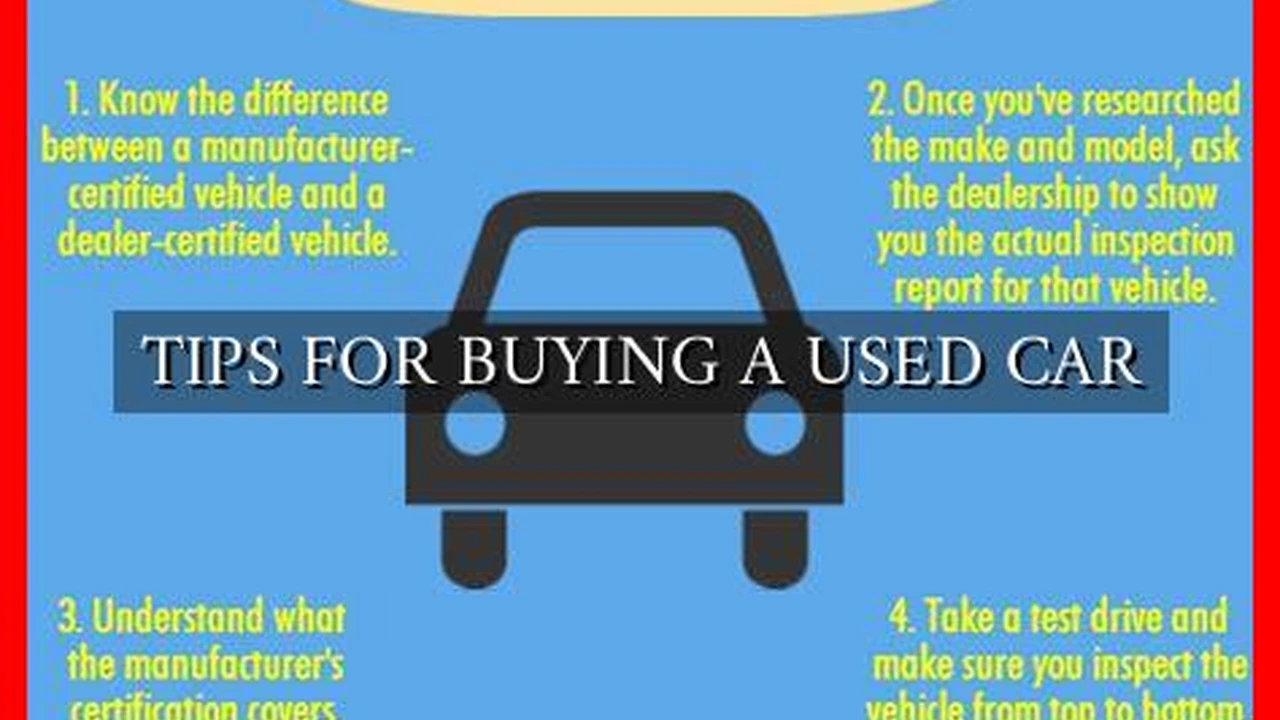
Discover five crucial tips for safely purchasing a used car and avoiding common pitfalls.
5 Tips for Buying a Used Car Safely
Hey there, car shoppers! Looking to snag a great deal on a used car? That's awesome! Buying a pre-owned vehicle can save you a ton of money compared to buying new, and with today's market, there are some fantastic options out there. But let's be real, it can also feel a bit like navigating a minefield. You want to make sure you're getting a reliable ride, not a money pit, right? That's why we've put together these five crucial tips to help you buy a used car safely and smartly. We're talking about avoiding those common pitfalls and driving away with a smile on your face.
Tip 1 Researching Your Used Car Options and Market Value
Alright, first things first: knowledge is power, especially when it comes to buying a used car. Before you even think about stepping onto a dealership lot or meeting a private seller, you need to do your homework. This isn't just about finding a car you like; it's about understanding what you're getting into and what a fair price looks like.
Understanding Your Needs and Budget for a Used Vehicle
Start by figuring out what you actually need. Are you commuting solo or hauling a family? Do you need something fuel-efficient for city driving or a robust SUV for weekend adventures? Think about your lifestyle. Once you have a general idea, set a realistic budget. And remember, your budget isn't just the purchase price; it also includes potential insurance costs, registration fees, and a little wiggle room for any immediate maintenance or repairs. Don't forget about ongoing costs like fuel and routine servicing!
Exploring Reliable Used Car Models and Brands
Once you know what you need, start looking at specific models. Websites like Consumer Reports, JD Power, and Kelley Blue Book (KBB) are your best friends here. They offer reliability ratings, owner reviews, and common problem areas for various makes and models. For example, if you're looking for a reliable sedan, a used Honda Civic or Toyota Corolla often come highly recommended for their longevity and low maintenance costs. If an SUV is more your speed, a used Honda CR-V or Toyota RAV4 are usually solid choices. Avoid models with consistently poor reliability scores, even if the price seems tempting. A cheap car that constantly breaks down isn't cheap in the long run.
Checking Used Car Market Value and Pricing Trends
Now, for the money talk. How do you know if you're getting a good deal? This is where market research comes in. Use sites like KBB.com, Edmunds.com, and NADAguides.com to get an estimated market value for the specific make, model, year, mileage, and condition of the car you're interested in. These sites will give you a range for private party sales and dealer retail prices. This information is crucial for negotiation. If a seller is asking significantly more than the market value without a very good reason (like extremely low mileage or rare features), that's a red flag. Conversely, if it's too cheap, that could also be a warning sign of underlying issues.
For example, let's say you're eyeing a 2018 Toyota Camry LE with 70,000 miles. You'd plug that into KBB and see what the fair purchase price range is for your area. This gives you a baseline. Also, check local listings on sites like AutoTrader, Cars.com, and even Facebook Marketplace to see what similar vehicles are actually selling for. This real-world data is invaluable.
Tip 2 Thoroughly Inspecting the Used Vehicle Condition
Okay, you've found a car that looks promising on paper. Now it's time to get up close and personal. This step is absolutely critical. Don't let a shiny exterior fool you; you need to dig deeper to uncover any hidden issues.
Conducting a Detailed Visual Inspection of the Used Car
When you first see the car, take your time. Walk around it slowly, looking for anything out of the ordinary. Check for mismatched paint panels, which could indicate previous accident repairs. Look for dents, scratches, and rust, especially around the wheel wells, rocker panels, and undercarriage. Open and close all the doors, the trunk, and the hood – do they operate smoothly? Check the gaps between body panels; uneven gaps can also point to accident damage.
Inside, check the upholstery for rips, tears, or excessive wear. Test all the electronics: lights, turn signals, wipers, radio, air conditioning, power windows, and locks. Make sure everything works as it should. Look for any warning lights on the dashboard when the car is started. A check engine light is a definite red flag.
Performing a Comprehensive Test Drive for Used Car Performance
A test drive isn't just a quick spin around the block. It's your chance to feel how the car performs. Drive it on different types of roads – city streets, highways, maybe even a bumpy road if possible. Pay attention to:
- Engine: Does it start easily? Are there any strange noises (knocking, ticking, whining)? Does it accelerate smoothly?
- Transmission: Does it shift gears smoothly, without jerking or hesitation?
- Brakes: Do they feel firm? Is there any squealing, grinding, or pulsing? Does the car pull to one side when braking?
- Steering: Does it feel tight and responsive, or loose and vague? Does the car pull to one side when driving straight?
- Suspension: Does it absorb bumps well, or does it feel overly bouncy or stiff? Listen for clunks or rattles over bumps.
- Tires: Look at the tread depth and wear pattern. Uneven wear can indicate alignment issues or worn suspension components.
Don't be afraid to spend at least 20-30 minutes on the test drive. If the seller rushes you, that's another potential red flag.
The Importance of a Pre Purchase Inspection PPI by a Certified Mechanic
This is arguably the most important tip. Even if you're pretty car-savvy, a professional mechanic will spot things you might miss. Before you finalize any deal, arrange for a pre-purchase inspection (PPI) by an independent, certified mechanic of your choice. This means taking the car to your mechanic, not one recommended by the seller or dealership. A PPI typically costs around $100-$200, but it can save you thousands in unexpected repairs down the line. The mechanic will put the car on a lift, check for leaks, inspect the brakes, suspension, exhaust, and run diagnostic tests. They'll give you a detailed report of the car's condition, highlighting any existing or potential problems. If the seller refuses a PPI, walk away. Seriously, just walk away.
Tip 3 Verifying Vehicle History and Documentation
So, the car looks good and drives well. Great! But what's its past? A car's history can tell you a lot about its future reliability. This is where documentation comes into play.
Obtaining a Comprehensive Vehicle History Report Carfax Autocheck
A vehicle history report is non-negotiable. Services like Carfax and AutoCheck provide detailed reports based on the car's Vehicle Identification Number (VIN). These reports can reveal crucial information such as:
- Accident history: Was the car ever involved in a major collision?
- Flood damage: Was it ever submerged in water? Flood-damaged cars are notorious for electrical problems.
- Salvage or rebuilt title: This means the car was declared a total loss by an insurance company and then repaired. These can be risky.
- Odometer discrepancies: Has the mileage been tampered with?
- Service records: Some reports include maintenance history, which is a huge plus.
- Number of previous owners: More owners can sometimes mean more varied driving habits and less consistent maintenance.
- Lien information: Is there an outstanding loan on the car? You don't want to buy a car that still belongs to a bank.
Many dealerships provide these reports for free, but if you're buying from a private seller, you might need to purchase one yourself. It's a small investment for peace of mind.
Reviewing Maintenance Records and Service History
Ask the seller for all available maintenance records. A car with a well-documented service history is a strong indicator that the previous owner took good care of it. Look for regular oil changes, tire rotations, and timely replacements of wear-and-tear items like brakes and belts. If the seller can't provide any records, it's not necessarily a deal-breaker, but it does add a layer of uncertainty. Combine this with the vehicle history report to get a clearer picture.
Checking the Vehicle Identification Number VIN and Title
Always verify the VIN on the car matches the VIN on the title and the vehicle history report. The VIN is usually located on the driver's side dashboard (visible through the windshield) and on a sticker on the driver's side door jamb. Make sure the title is clean and clear, meaning there are no liens against it. If you're buying from a private seller, ensure the name on the title matches the seller's ID. Never buy a car without a clear title in hand.
Tip 4 Understanding Pricing Negotiation and Financing Options
You've done your research, inspected the car, and verified its history. Now comes the part where you talk money. Don't be afraid to negotiate; it's expected!
Effective Negotiation Strategies for Used Car Purchases
Go into negotiations armed with your market research from Tip 1. Know the fair price range. Start with an offer slightly below what you're willing to pay, leaving room for the seller to counter. Be polite but firm. Highlight any issues found during your inspection or PPI as leverage for a lower price. For example, if the mechanic found that the tires need replacing soon, you can use that to ask for a discount. Don't fall in love with the car; be prepared to walk away if you can't agree on a fair price. There are always other cars out there.
When dealing with dealerships, remember they have more wiggle room than private sellers. They also have various fees they might try to add on. Ask for an itemized list of all costs. Be wary of high-pressure sales tactics. Take your time, and don't sign anything you don't fully understand.
Exploring Used Car Financing and Loan Options
If you need financing, it's usually best to get pre-approved for a loan from your bank or credit union before you even start shopping. This gives you a clear budget and allows you to focus on the car, not the financing. It also gives you leverage at the dealership, as you already have a financing option in your back pocket. Compare interest rates and terms from different lenders. Don't just automatically accept the financing offered by the dealership; sometimes they have competitive rates, but sometimes they don't.
Comparing Extended Warranties and Service Contracts
Dealerships will almost certainly try to sell you an extended warranty or service contract. These can be beneficial for peace of mind, especially on older or higher-mileage vehicles, but they're not always necessary or cost-effective. Carefully read the terms and conditions. What does it cover? What does it exclude? What's the deductible? How long does it last? Compare the cost of the warranty to the potential repair costs identified in your PPI. Sometimes, it's cheaper to just set aside an emergency fund for repairs. For example, a 3-year/36,000-mile extended warranty on a 5-year-old sedan might cost $2,000. If your PPI only found minor issues, that money might be better off in your savings account.
Tip 5 Completing the Purchase and Protecting Your Investment
You've found the perfect used car, negotiated a great price, and secured financing. Now it's time to seal the deal and make sure everything is legally sound.
Understanding the Bill of Sale and Transfer of Ownership
Whether you're buying from a private seller or a dealership, you'll need a bill of sale. This document legally transfers ownership of the vehicle from the seller to you. Make sure it includes:
- The full names and addresses of both buyer and seller.
- The date of sale.
- The vehicle's make, model, year, and VIN.
- The odometer reading at the time of sale.
- The agreed-upon purchase price.
- Signatures of both buyer and seller.
For private sales, you'll also need the seller to sign over the vehicle title to you. Make sure all sections are filled out correctly, including the odometer disclosure statement. In some states, you might need to get the title notarized.
Registering Your Used Car and Obtaining License Plates
After purchasing the car, you'll need to register it with your state's Department of Motor Vehicles (DMV) or equivalent agency. This usually involves submitting the signed title, bill of sale, proof of insurance, and paying registration fees and sales tax. You'll then receive your new license plates and registration sticker. Don't delay this step, as there are often deadlines, and driving an unregistered vehicle can lead to fines.
Securing Adequate Car Insurance Coverage for Your New Used Vehicle
Before you even drive your new-to-you car off the lot, you need to have insurance. Contact your insurance provider beforehand to get a quote and arrange coverage. You'll typically need at least liability insurance, but depending on your loan terms and personal preference, you might want comprehensive and collision coverage as well. Make sure your policy is active on the day you take possession of the car. Driving uninsured is illegal and incredibly risky.
Recommended Products for Used Car Owners
Once you've got your used car, you'll want to keep it in top shape. Here are a few product recommendations that can help:
OBD2 Scanners for DIY Diagnostics
An OBD2 scanner is a fantastic tool for any car owner, especially for used cars. It plugs into your car's diagnostic port and can read engine trouble codes, giving you an idea of what might be wrong if a check engine light comes on. This can save you money by helping you diagnose minor issues yourself or at least go into a mechanic visit with more information.
- Entry-Level: Ancel AD310 Classic Enhanced OBD II Scanner
- Use Case: Basic code reading and clearing, live data stream. Great for beginners.
- Price: Around $35-$50.
- Comparison: Simple, user-friendly, and gets the job done for most common issues.
- Mid-Range: Autel MaxiCOM MK808BT
- Use Case: More advanced diagnostics, bi-directional control, service functions (oil reset, EPB, BMS). Good for serious DIYers.
- Price: Around $500-$700.
- Comparison: Offers much more functionality than basic scanners, approaching professional-level tools.
Battery Chargers and Jump Starters for Emergency Preparedness
A dead battery is a common issue, especially with used cars. Having a portable jump starter or a battery tender can be a lifesaver.
- Portable Jump Starter: NOCO Boost Plus GB40
- Use Case: Jump-starting a dead car battery without another vehicle. Also acts as a power bank for devices.
- Price: Around $100-$150.
- Comparison: Compact, powerful, and safer than traditional jumper cables.
- Battery Tender: Battery Tender Junior Charger and Maintainer
- Use Case: Keeping your battery charged if your car sits for extended periods, preventing sulfation.
- Price: Around $30-$50.
- Comparison: A trickle charger that extends battery life, ideal for seasonal vehicles or those not driven daily.
Dash Cams for Accident Documentation and Security
A dash cam provides an objective record of what happens on the road, which can be invaluable in case of an accident or for insurance claims.
- Budget-Friendly: VIOFO A119 V3
- Use Case: High-quality video recording (1440p), parking mode, GPS logging.
- Price: Around $100-$120.
- Comparison: Excellent video quality for its price point, reliable.
- Premium: BlackVue DR900X-2CH Plus
- Use Case: Front and rear recording (4K front, 1080p rear), cloud connectivity, advanced parking mode.
- Price: Around $400-$500.
- Comparison: Top-tier features, ideal for maximum coverage and remote monitoring.
Tire Pressure Gauges and Portable Air Compressors
Proper tire pressure is crucial for safety, fuel efficiency, and tire longevity. These tools help you maintain it.
- Digital Tire Gauge: AstroAI Digital Tire Pressure Gauge
- Use Case: Quickly and accurately checking tire pressure.
- Price: Around $10-$15.
- Comparison: More accurate and easier to read than traditional stick gauges.
- Portable Air Compressor: Slime 40026 12V Digital Tire Inflator
- Use Case: Inflating tires on the go, fixing slow leaks, or adjusting pressure.
- Price: Around $40-$60.
- Comparison: Compact, plugs into your car's 12V outlet, and has an auto-shutoff feature.
Buying a used car can be a fantastic experience, leading to years of reliable transportation and significant savings. By following these five tips – doing your research, thoroughly inspecting the vehicle, verifying its history, negotiating smartly, and properly completing the purchase – you'll be well-equipped to make a safe and informed decision. Happy car hunting, and enjoy your new ride!
:max_bytes(150000):strip_icc()/277019-baked-pork-chops-with-cream-of-mushroom-soup-DDMFS-beauty-4x3-BG-7505-5762b731cf30447d9cbbbbbf387beafa.jpg)