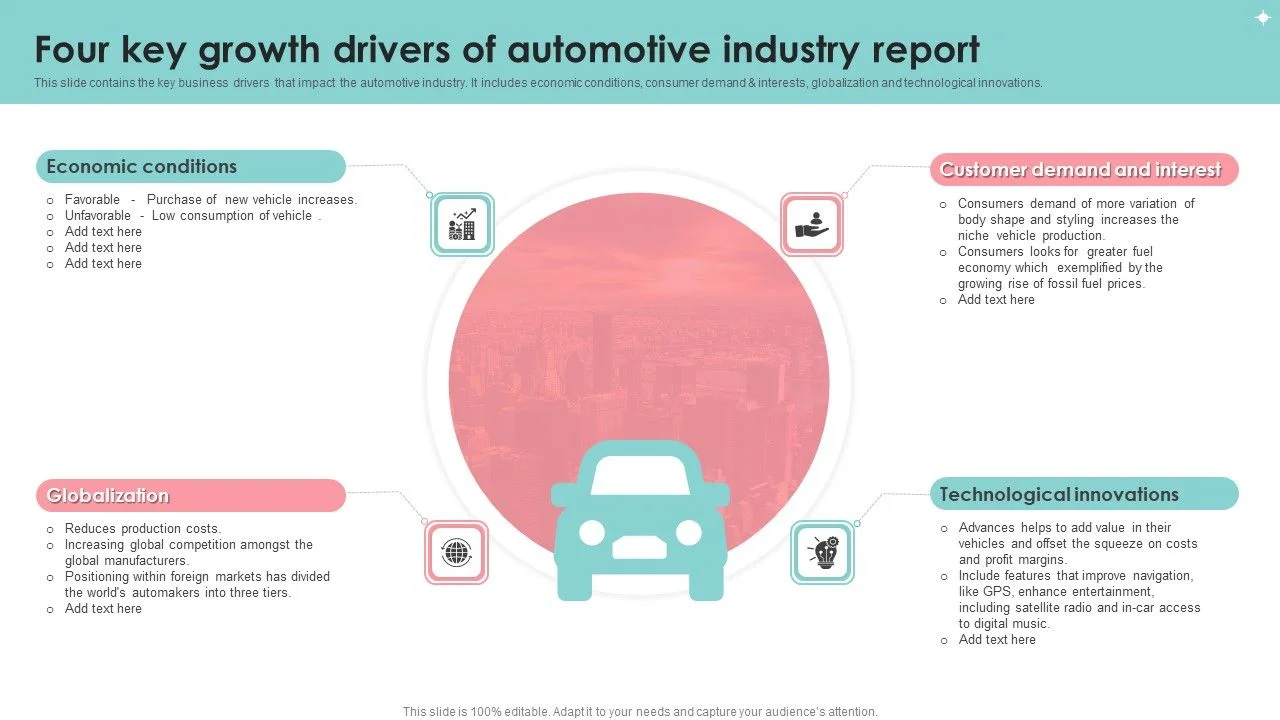
Discover five key trends that are redefining the concept of car ownership globally.
Discover five key trends that are redefining the concept of car ownership globally. The automotive landscape is undergoing a seismic shift, moving away from the traditional model of individual car ownership towards a more flexible, sustainable, and technologically integrated future. This isn't just about electric vehicles or self-driving cars; it's about a fundamental change in how we perceive, acquire, and utilize personal transportation. For both the US and Southeast Asian markets, these trends present unique opportunities and challenges, influencing everything from urban planning to insurance policies.
5 Trends Shaping the Future of Car Ownership
The Rise of Subscription Services and Flexible Ownership Models
Forget the long-term commitment of buying or leasing a car. Car subscription services are rapidly gaining traction, offering unparalleled flexibility. Imagine paying a monthly fee that covers not just the vehicle, but also insurance, maintenance, and even roadside assistance. It's like Netflix for cars, allowing you to swap vehicles based on your needs – an SUV for a family road trip, a compact sedan for city commuting, or even a luxury car for a special occasion. This model is particularly appealing to younger generations who prioritize access over ownership and value convenience above all else.
What are Car Subscription Services?
Car subscription services provide access to a vehicle for a recurring monthly fee, typically including insurance, maintenance, and sometimes even fuel or charging. Unlike traditional leases, these subscriptions often have shorter terms and allow for vehicle swaps. This flexibility is a game-changer for urban dwellers who might not need a car every day or for those who want to try out different models without the commitment of purchase.
Key Players and Offerings in the US Market
In the US, several major players are making waves. For instance, Care by Volvo offers a subscription service for new Volvo models, bundling insurance, maintenance, and roadside assistance into a single monthly payment. Prices typically range from $600 to $1,100 per month, depending on the model. This is great for individuals who appreciate premium vehicles and want a hassle-free ownership experience. Another notable option is Porsche Passport, which caters to luxury enthusiasts, allowing subscribers to switch between various Porsche models for a higher monthly fee, starting around $2,000. This is perfect for someone who loves the thrill of driving different high-performance cars without the burden of multiple purchases.
For a more mainstream approach, companies like Fair (now part of Canoo) and Flexdrive (a Cox Automotive brand) offer subscriptions for a wider range of used and new vehicles, often with more flexible terms and lower entry points. Fair, for example, used to allow users to 'subscribe' to a car for a weekly or monthly fee, with the option to return it at any time. While Fair's model has evolved, the concept of short-term, all-inclusive car access remains highly attractive.
Emerging Models in Southeast Asia
Southeast Asia is also seeing a surge in flexible ownership models, often driven by ride-hailing giants and local startups. Companies like Grab and Go-Jek, while primarily ride-hailing platforms, are exploring subscription models for their drivers and even for general consumers in some markets. For example, in Singapore, services like Carro Leap offer car subscriptions with various tiers, including insurance and maintenance. These services are particularly popular in densely populated cities where parking is a premium and public transport is extensive, but occasional car access is still desired. The pricing can vary significantly based on the car model and subscription duration, but generally starts from around $500-$800 USD equivalent per month for a mid-range sedan.
Comparing Subscription vs Traditional Ownership
| Feature | Car Subscription | Traditional Ownership (Purchase/Lease) |
|---------------------|------------------------------------------------|------------------------------------------------|
| Commitment | Short-term, flexible | Long-term (loan, lease agreement) |
| Included Costs | Insurance, maintenance, roadside assistance | Separate costs for insurance, maintenance, etc. |
| Vehicle Swaps | Often allowed | Not typically allowed |
| Down Payment | Usually none or low | Significant down payment often required |
| Depreciation Risk | Borne by the subscription provider | Borne by the owner |
| Target Audience | Urban dwellers, tech-savvy, value flexibility | Traditionalists, value long-term asset |
The Growing Influence of Shared Mobility and Car-Sharing Platforms
Why own a car when you can simply access one when you need it? Car-sharing platforms are revolutionizing urban transportation, offering a convenient and often more economical alternative to private car ownership. This trend is particularly strong in metropolitan areas where parking is scarce and public transportation is robust. It's about optimizing resource utilization and reducing the number of idle vehicles on our streets.
How Car-Sharing Works
Car-sharing services allow users to rent vehicles for short periods, often by the hour or minute, through a mobile app. Users locate available cars, unlock them with their smartphone, and pay only for the time and distance they use. This model significantly reduces the financial burden of car ownership, including insurance, maintenance, and parking fees.
Leading Car-Sharing Services in the US
In the US, Zipcar remains a dominant force, offering a wide network of vehicles in major cities and university campuses. Membership fees vary, and hourly rates typically range from $8 to $15, including gas and insurance. Zipcar is ideal for those who need a car for errands, appointments, or short trips. Another popular option is Turo, often dubbed the 'Airbnb for cars.' Turo allows private car owners to rent out their vehicles to others, offering a wider variety of cars and often more competitive pricing than traditional rental agencies. Prices on Turo can vary wildly depending on the car and location, but you can often find daily rentals for as low as $30-$50.
Car-Sharing Landscape in Southeast Asia
Southeast Asia's car-sharing scene is also vibrant, with a mix of international and local players. In Singapore, BlueSG (an electric car-sharing service) has gained significant traction, offering an eco-friendly option for short-term rentals. Their pricing is typically per minute, making it very cost-effective for quick trips. Other services like GetGo and Tribecar also offer hourly and daily rentals across various vehicle types. In countries like Malaysia and Indonesia, local startups are emerging, often focusing on specific urban centers. These services are particularly beneficial in cities with high traffic congestion, providing an alternative to owning a second car or relying solely on public transport.
Benefits of Car-Sharing for Consumers and Cities
For consumers, car-sharing offers significant cost savings by eliminating insurance, maintenance, and parking expenses. It also provides access to a variety of vehicles without the commitment of ownership. For cities, car-sharing can reduce traffic congestion, free up parking spaces, and lower carbon emissions by encouraging more efficient vehicle use. It's a win-win situation for urban environments striving for sustainability.
The Acceleration of Electric Vehicle Adoption and Infrastructure Development
The shift to electric vehicles (EVs) is no longer a niche movement; it's a global imperative. Concerns about climate change, rising fuel prices, and advancements in battery technology are driving unprecedented EV adoption. This trend is fundamentally reshaping car ownership, from how we refuel to how we maintain our vehicles.
EV Growth in the US Market
The US market is experiencing exponential EV growth, fueled by government incentives, expanding charging infrastructure, and a wider range of compelling EV models. Brands like Tesla continue to dominate, with models like the Model 3 (starting around $40,000) and Model Y (starting around $45,000) being top sellers. However, traditional automakers are rapidly catching up. The Ford Mustang Mach-E (starting around $43,000) and the Hyundai Ioniq 5 (starting around $41,000) are excellent examples of competitive EVs offering impressive range and features. These vehicles are appealing to a broad spectrum of buyers, from eco-conscious individuals to tech enthusiasts.
Charging infrastructure is also expanding rapidly, with networks like Electrify America and EVgo adding thousands of fast chargers across the country. Home charging solutions, such as the ChargePoint Home Flex (around $700) or the Wallbox Pulsar Plus (around $650), make daily charging convenient and cost-effective. The availability of reliable charging is crucial for alleviating range anxiety and encouraging more drivers to make the switch.
EV Landscape in Southeast Asia
Southeast Asia is also embracing EVs, albeit at a different pace and with unique challenges. Governments in countries like Thailand, Indonesia, and Singapore are offering incentives to boost EV sales and attract manufacturing investments. Chinese EV brands like BYD and Nio are making significant inroads, offering more affordable options compared to their Western counterparts. For example, the BYD Atto 3 (starting around $30,000-$35,000 USD equivalent in some markets) is gaining popularity due to its competitive pricing and decent range. Local players and partnerships are also emerging, focusing on electric motorcycles and scooters, which are a dominant mode of transport in many Southeast Asian cities.
Charging infrastructure is still developing in many parts of Southeast Asia, but investments are pouring in. Companies like EV charging solutions provider EV Connect and local energy companies are working to build out public charging networks. The focus is often on urban centers first, with plans to expand to more rural areas. The cost of electricity for charging is generally lower than gasoline, making EVs an attractive long-term investment for many consumers.
Comparing EV Models and Charging Solutions
| EV Model | Starting Price (Approx. US) | Range (EPA Est.) | Key Features | Target User |
|----------------------|-----------------------------|------------------|-----------------------------------------------|-----------------------------------------------|
| Tesla Model 3 | $40,000 | 272-333 miles | Advanced tech, Supercharger network, performance | Tech-savvy, performance-oriented |
| Ford Mustang Mach-E | $43,000 | 250-310 miles | Sporty design, familiar brand, good range | Traditional car buyers, SUV lovers |
| Hyundai Ioniq 5 | $41,000 | 220-303 miles | Unique design, fast charging, spacious interior | Design-conscious, value fast charging |
| BYD Atto 3 (SEA) | $30,000-$35,000 (est.) | 260-310 miles (WLTP) | Affordable, practical, good value | Budget-conscious, urban commuters |
| Charging Solution | Type | Price (Approx. US) | Key Benefit | Use Case |
|----------------------|-----------------------------|--------------------|-----------------------------------------------|-----------------------------------------------|
| ChargePoint Home Flex| Level 2 (240V) | $700 | Fast home charging, smart features | Daily home charging, overnight top-ups |
| Wallbox Pulsar Plus | Level 2 (240V) | $650 | Compact, smart features, easy installation | Home charging, space-conscious |
| Electrify America | DC Fast Charging | Varies per kWh | Rapid charging on long trips, highway network | Road trips, quick public charging |
| BlueSG (Singapore) | AC Charging (Public) | Per minute | Urban short trips, eco-friendly | City commuting, short-term rentals |
The Integration of Advanced Driver-Assistance Systems (ADAS) and Autonomous Features
Modern cars are becoming increasingly intelligent, equipped with a suite of technologies designed to enhance safety, convenience, and even driving pleasure. Advanced Driver-Assistance Systems (ADAS) are paving the way for fully autonomous vehicles, fundamentally changing the driver's role and the very nature of car ownership.
Key ADAS Features and Their Impact
ADAS features range from adaptive cruise control and lane-keeping assist to automatic emergency braking and blind-spot monitoring. These systems significantly reduce the risk of accidents and driver fatigue. For example, Adaptive Cruise Control (ACC) automatically adjusts your speed to maintain a safe distance from the car ahead, making highway driving much less stressful. Lane Keeping Assist (LKA) helps keep the vehicle centered in its lane, preventing unintentional lane departures. These features are becoming standard in many new vehicles, even in mid-range segments.
Towards Autonomous Driving
While fully autonomous (Level 5) vehicles are still some years away, Level 2 and Level 3 autonomous features are already available in many premium cars. Tesla's Autopilot and Full Self-Driving (FSD) Beta (though still requiring driver supervision) are prominent examples, offering advanced capabilities like automatic lane changes and navigating highway interchanges. Other manufacturers like Mercedes-Benz with their Drive Pilot system are also pushing the boundaries, offering conditional autonomous driving in specific scenarios. These technologies promise to make driving safer, more efficient, and eventually, allow occupants to reclaim their time during commutes.
Impact on Insurance and Regulations
The proliferation of ADAS and autonomous features has significant implications for the insurance industry. As cars become safer, the frequency and severity of accidents may decrease, potentially leading to lower insurance premiums. However, the complexity of these systems also introduces new challenges, such as determining liability in autonomous vehicle accidents. Regulators in both the US and Southeast Asia are actively working to establish frameworks for testing, deployment, and liability related to autonomous vehicles.
Comparing ADAS Systems
| ADAS Feature | Function | Benefit | Common in (Examples) |
|--------------------------|-----------------------------------------------|-----------------------------------------------|-----------------------------------------------|
| Adaptive Cruise Control | Maintains set distance from vehicle ahead | Reduces driver fatigue, enhances safety | Honda Sensing, Toyota Safety Sense, Tesla Autopilot |
| Lane Keeping Assist | Helps keep vehicle centered in lane | Prevents unintentional lane departure | Subaru EyeSight, Hyundai SmartSense |
| Automatic Emergency Braking | Detects obstacles and applies brakes | Prevents or mitigates collisions | Standard in many new cars |
| Blind Spot Monitoring | Warns of vehicles in blind spots | Enhances lane change safety | Most modern vehicles |
| Parking Assist | Automatically steers for parallel/perpendicular parking | Reduces parking stress, prevents scrapes | BMW Parking Assistant, Ford Active Park Assist |
The Evolution of In-Car Connectivity and Infotainment Systems
The car is no longer just a mode of transport; it's an extension of our digital lives. Advanced infotainment systems and seamless connectivity are transforming the driving experience, offering everything from navigation and entertainment to remote vehicle control and over-the-air updates.
Connected Car Features and Benefits
Modern infotainment systems, often powered by platforms like Apple CarPlay and Android Auto, integrate smartphone functionalities directly into the car's display. This allows drivers to access navigation apps, stream music, make calls, and send messages safely. Beyond mirroring, many cars now offer built-in Wi-Fi hotspots, allowing passengers to stay connected on the go. Remote vehicle control apps enable owners to lock/unlock doors, start the engine, or even pre-condition the cabin from their smartphone.
Over-the-Air (OTA) Updates
One of the most significant advancements is the ability for cars to receive Over-the-Air (OTA) updates, much like smartphones. This means manufacturers can push software updates to improve performance, add new features, or fix bugs without requiring a visit to the dealership. Tesla pioneered this, but now many other brands like Ford, GM, and Mercedes-Benz are adopting OTA capabilities. This keeps cars feeling fresh and up-to-date, enhancing their longevity and value.
Impact on User Experience and Data Privacy
The enhanced connectivity significantly improves the user experience, making commutes more enjoyable and productive. However, it also raises important questions about data privacy and cybersecurity. Connected cars generate vast amounts of data, from driving habits to location information. Manufacturers and service providers must ensure robust security measures and transparent data handling practices to maintain consumer trust. For consumers, understanding privacy policies and managing data permissions will become increasingly important.
Comparing Infotainment Systems
| System/Feature | Key Characteristics | Benefits | Examples |
|------------------------|---------------------------------------------------|-----------------------------------------------|-----------------------------------------------|
| Apple CarPlay | iOS integration, familiar interface, voice control | Seamless iPhone integration, safe app access | Available in most new cars |
| Android Auto | Android integration, Google services, voice control | Seamless Android integration, safe app access | Available in most new cars |
| Tesla Infotainment | Large touchscreen, OTA updates, gaming, streaming | Cutting-edge tech, constant improvements | Tesla Model S, 3, X, Y |
| Mercedes-Benz MBUX | AI voice assistant, augmented reality navigation | Intuitive, personalized, advanced features | Mercedes-Benz A-Class, C-Class, S-Class |
| Ford SYNC 4 | Large screens, cloud connectivity, OTA updates | User-friendly, robust, future-proof | Ford F-150, Mustang Mach-E, Bronco |
These five trends are not just isolated developments; they are interconnected forces collectively reshaping the future of car ownership. From how we acquire vehicles to how they interact with our daily lives, the automotive industry is in a constant state of evolution. Staying informed about these changes is key for anyone navigating the exciting world of cars, whether you're a buyer, a seller, or an industry professional.
:max_bytes(150000):strip_icc()/277019-baked-pork-chops-with-cream-of-mushroom-soup-DDMFS-beauty-4x3-BG-7505-5762b731cf30447d9cbbbbbf387beafa.jpg)