Autonomous Driving Technology Pros and Cons
An in-depth look at the advantages and disadvantages of autonomous driving technology for consumers.
An in-depth look at the advantages and disadvantages of autonomous driving technology for consumers.
Autonomous Driving Technology Pros and Cons
Understanding Autonomous Driving Levels and What They Mean for You
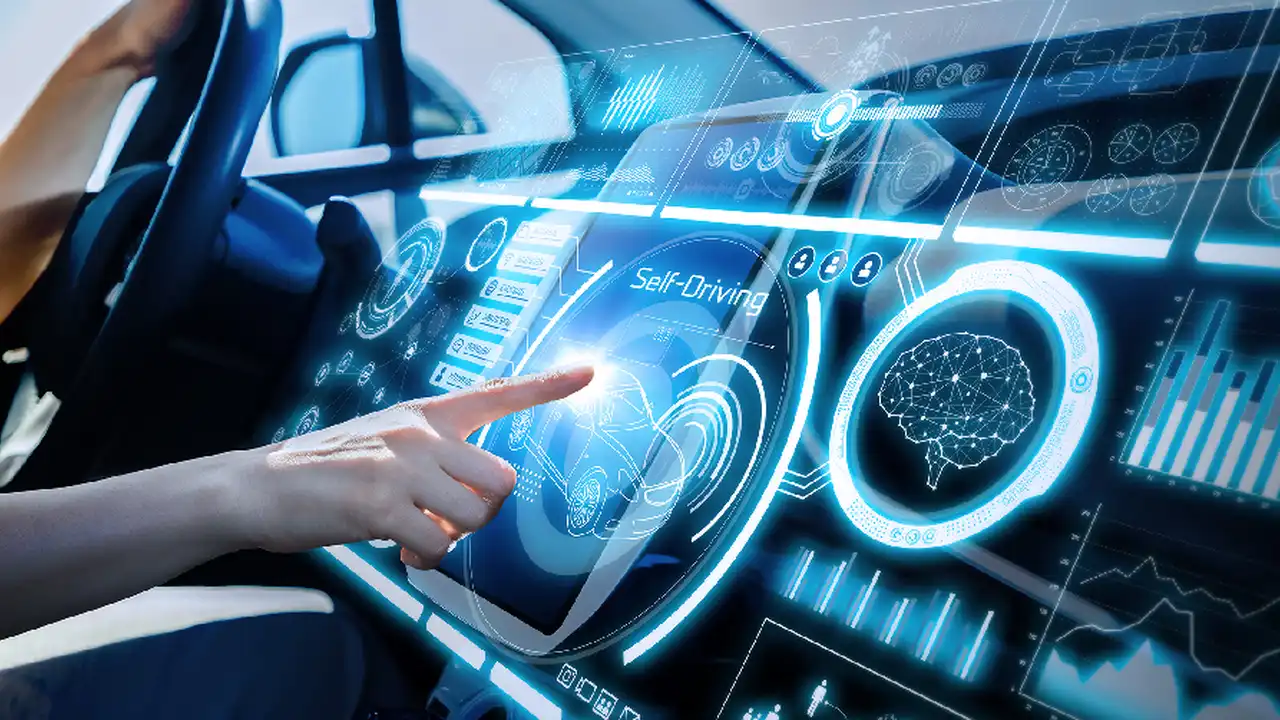
Autonomous driving technology, often referred to as self-driving cars, is rapidly evolving, promising a future where vehicles navigate roads with minimal human intervention. But what exactly does 'autonomous' mean, and how far along are we? The Society of Automotive Engineers (SAE) has established a widely accepted classification system, ranging from Level 0 (no automation) to Level 5 (full automation). Understanding these levels is crucial for grasping the current capabilities and limitations of self-driving cars.
SAE Level 0 No Automation
This is your traditional car. The human driver does everything: steering, braking, accelerating. No automated systems are involved in controlling the vehicle.
SAE Level 1 Driver Assistance
At this level, the vehicle has a single automated system for driver assistance, such as adaptive cruise control or lane keeping assist. The driver is still responsible for monitoring the driving environment and performing all other driving tasks. Think of it as a helpful co-pilot, but you're still the captain.
SAE Level 2 Partial Driving Automation
Here, the vehicle can take over both steering and acceleration/deceleration in specific circumstances. Features like Tesla's Autopilot or General Motors' Super Cruise fall into this category. However, the driver must remain engaged, monitor the road, and be ready to take over at any moment. This is where many current advanced vehicles sit, offering a taste of automation but demanding constant human supervision.
SAE Level 3 Conditional Driving Automation
This is where things get interesting. At Level 3, the vehicle can handle all aspects of driving under certain conditions, such as on highways. The driver doesn't need to monitor the environment constantly but must be prepared to intervene when the system requests it. This 'hand-off' can be tricky, as human reaction times can be slow. Mercedes-Benz's DRIVE PILOT is one of the first systems to achieve Level 3 certification in certain regions.
SAE Level 4 High Driving Automation
A Level 4 vehicle can perform all driving tasks and monitor the driving environment under specific conditions (e.g., within a geofenced area or specific weather conditions). If the system encounters a situation it cannot handle, it will safely bring the vehicle to a stop if the driver doesn't take over. Think of robotaxis operating in designated zones, like Waymo or Cruise in certain US cities.
SAE Level 5 Full Driving Automation
This is the holy grail: the vehicle can perform all driving functions under all conditions, with no human intervention required. There's no steering wheel or pedals needed. Level 5 vehicles are still largely in the research and development phase, but they represent the ultimate vision of autonomous driving.
The Advantages of Autonomous Driving Technology for US and Southeast Asian Consumers
The promise of autonomous driving extends far beyond just convenience. For consumers in both the US and Southeast Asia, the benefits could be transformative, impacting everything from daily commutes to long-term societal well-being.
Enhanced Safety and Accident Reduction
One of the most compelling arguments for autonomous vehicles is their potential to drastically reduce accidents. Human error accounts for over 90% of all road accidents. Self-driving cars, free from distractions, fatigue, or impairment, could theoretically eliminate many of these incidents. Imagine a future with significantly fewer traffic fatalities and injuries, leading to lower healthcare costs and insurance premiums. This is particularly relevant in regions like Southeast Asia, which often face higher rates of road accidents due to diverse road conditions and driving behaviors.
Increased Efficiency and Reduced Traffic Congestion
Autonomous vehicles can communicate with each other and with infrastructure, optimizing traffic flow. They can maintain consistent speeds, follow more closely, and react faster than human drivers, leading to smoother traffic and reduced congestion. This means shorter commute times, less wasted fuel, and a more pleasant driving experience. For densely populated urban centers in the US and rapidly growing cities in Southeast Asia, this could be a game-changer for urban planning and quality of life.
Greater Accessibility and Mobility for All
Self-driving cars offer unprecedented mobility for individuals who currently cannot drive, such as the elderly, people with disabilities, or those without a driver's license. This opens up new opportunities for independence, employment, and social engagement. In rural areas of the US or developing regions of Southeast Asia where public transportation might be limited, autonomous vehicles could provide vital access to services and opportunities.
Productivity and Leisure During Commutes
Imagine reclaiming your commute time. Instead of focusing on the road, you could work, read, relax, or even sleep. This increased productivity or leisure time could significantly improve work-life balance and reduce stress, especially for those with long daily commutes in bustling metropolitan areas.
Lower Fuel Consumption and Emissions
Optimized driving patterns, smoother acceleration and braking, and reduced idling time can lead to significant improvements in fuel efficiency. This not only saves money for consumers but also contributes to lower carbon emissions, aligning with global efforts to combat climate change. This environmental benefit is particularly attractive in regions grappling with air quality issues.
Reduced Parking Stress and Costs
Autonomous vehicles could drop off passengers and then autonomously find parking, even in remote lots, or circle until needed. This would alleviate parking congestion in urban areas and potentially reduce the need for expensive parking structures, freeing up valuable urban space for other uses.
The Disadvantages and Challenges of Autonomous Driving Technology for Consumers
While the benefits are compelling, autonomous driving technology also presents a complex set of challenges and disadvantages that need to be addressed before widespread adoption.
High Initial Cost and Affordability Concerns
The advanced sensors, computing power, and software required for autonomous driving are expensive. This means that early autonomous vehicles will likely come with a premium price tag, making them inaccessible to many consumers, especially in price-sensitive markets like Southeast Asia. The cost of maintenance and repairs for these complex systems could also be higher.
Safety Concerns and Public Trust
Despite the promise of increased safety, accidents involving autonomous vehicles, even rare ones, garner significant media attention and erode public trust. The ethical dilemmas of programming a car to make life-or-death decisions in unavoidable accident scenarios are also a major concern. Building public confidence through rigorous testing, transparent reporting, and clear regulatory frameworks is paramount.
Cybersecurity Risks and Data Privacy
Autonomous vehicles are essentially computers on wheels, making them vulnerable to cyberattacks. Hacking a self-driving car could have catastrophic consequences, from remote control to data theft. Furthermore, these vehicles collect vast amounts of data about their occupants and surroundings, raising significant privacy concerns about how this data is stored, used, and protected.
Regulatory and Legal Complexities
The legal framework for autonomous vehicles is still in its infancy. Questions about liability in the event of an accident, international harmonization of regulations, and licensing requirements for autonomous systems are complex and vary significantly across different jurisdictions, creating hurdles for deployment in diverse markets like the US and Southeast Asia.
Job Displacement in Transportation Sectors
The widespread adoption of autonomous vehicles could lead to significant job displacement for professional drivers, including taxi drivers, truck drivers, and delivery personnel. This societal impact needs careful consideration and planning for retraining and new economic opportunities.
Infrastructure Requirements and Investment
While Level 5 vehicles can operate anywhere, lower levels of automation often benefit from or even require smart infrastructure (e.g., V2X communication, advanced road markings). Upgrading existing infrastructure to support autonomous vehicles would require massive investment, which could be a significant barrier, particularly in developing regions.
Ethical Dilemmas and Decision-Making Algorithms
In unavoidable accident scenarios, autonomous vehicles will need to make split-second decisions that could prioritize one life over another. Programming these ethical algorithms is incredibly challenging and raises profound philosophical questions about who decides and how these decisions are made. Public acceptance of these algorithms is a critical factor.
Comparing Autonomous Driving Products and Features for Consumers
While full Level 5 autonomy is still a distant dream for consumer vehicles, many cars on the market today offer advanced driver-assistance systems (ADAS) that provide a taste of autonomous driving. Here's a look at some prominent systems and what they offer, along with their typical price points and use cases.
Tesla Autopilot and Full Self-Driving FSD Beta
- Description: Tesla's Autopilot is a Level 2 system that includes Traffic-Aware Cruise Control and Autosteer. FSD Beta, an optional upgrade, aims for Level 2+ or even Level 3 capabilities, allowing the car to navigate on city streets, make turns, and stop at traffic lights.
- Key Features: Automatic lane changes, summon, auto park, navigate on Autopilot (highway driving from on-ramp to off-ramp). FSD Beta adds city street driving capabilities.
- Use Case: Primarily for highway driving with Autopilot, and increasingly for urban driving with FSD Beta, though constant driver supervision is required.
- Typical Price: Autopilot is standard on all new Teslas. FSD is an optional upgrade, currently priced at around $12,000 (one-time purchase) or a monthly subscription of $199 in the US. Prices may vary in Southeast Asian markets where FSD is less prevalent.
- Pros: Constantly improving with over-the-air updates, extensive data collection for rapid development, intuitive user interface.
- Cons: Driver must remain vigilant, FSD Beta is still in development and can be unpredictable, high cost for FSD, some features not available in all regions.
General Motors Super Cruise
- Description: Super Cruise is a Level 2 hands-free driving system that works on over 400,000 miles of compatible roads in the US and Canada. It uses LiDAR map data, high-precision GPS, and a driver attention system.
- Key Features: Hands-free driving on mapped highways, automatic lane change, trailering assist.
- Use Case: Long-distance highway driving, reducing driver fatigue.
- Typical Price: Often included in higher trim levels of Cadillac, Chevrolet, and GMC vehicles, or as an optional package costing around $2,500 to $5,000, plus a subscription fee after an initial trial period.
- Pros: True hands-free operation on compatible roads, robust driver attention monitoring, generally smooth and reliable.
- Cons: Limited to mapped highways, not available on all GM models, requires a subscription after trial.
Mercedes-Benz DRIVE PILOT
- Description: DRIVE PILOT is a groundbreaking Level 3 conditional automated driving system, currently approved for use in specific conditions in Germany and parts of the US (e.g., Nevada, California). It allows the driver to disengage from driving tasks under specific circumstances.
- Key Features: Hands-off, eyes-off driving in heavy traffic up to 40 mph (60 km/h) on suitable highway sections. The system takes full responsibility during operation.
- Use Case: Ideal for stop-and-go traffic on highways, allowing the driver to perform non-driving related tasks.
- Typical Price: Expected to be an expensive optional extra on high-end Mercedes-Benz models like the S-Class and EQS, potentially costing upwards of $5,000 to $7,000 annually or as a one-time purchase.
- Pros: First certified Level 3 system, allows driver to truly disengage, high level of safety redundancy.
- Cons: Extremely limited operational design domain (ODD), very high cost, not widely available yet.
Nissan ProPILOT Assist 2.0
- Description: ProPILOT Assist 2.0 is a Level 2 hands-off driving system for single-lane highway driving, similar to Super Cruise but with slightly different operational parameters. It also uses a driver monitoring system.
- Key Features: Hands-off driving on compatible highways, automatic lane changes, navigation-linked assistance.
- Use Case: Highway driving, offering a more relaxed experience.
- Typical Price: Available on select Nissan models like the Ariya and Rogue, often as part of a technology package, adding around $2,000 to $3,000 to the vehicle price.
- Pros: Hands-off capability, generally smooth operation, good value compared to some competitors.
- Cons: Limited to single-lane highway driving, driver attention required, not as widespread as some other systems.
Waymo and Cruise Robotaxis
- Description: These are Level 4 autonomous ride-hailing services operating in specific geofenced areas in cities like Phoenix, San Francisco, and Austin. They are not consumer-purchasable vehicles but rather a service.
- Key Features: Fully autonomous driving within their operational domains, no human safety driver required in many instances.
- Use Case: Urban mobility, ride-hailing services.
- Typical Price: Standard ride-hailing fares, comparable to or slightly higher than traditional taxi or rideshare services.
- Pros: True Level 4 autonomy, convenient urban transportation, potential for significant safety improvements.
- Cons: Extremely limited availability (geofenced areas), not a personal vehicle ownership option, still in expansion phase.
The Future Outlook for Autonomous Driving in the US and Southeast Asia
The journey towards widespread autonomous driving is a marathon, not a sprint. While Level 5 autonomy remains a long-term goal, the incremental advancements in ADAS and the gradual expansion of Level 3 and Level 4 systems are paving the way for a transformative future.
Regulatory Harmonization and Public Acceptance
For autonomous driving to truly flourish, especially across diverse markets like the US and Southeast Asia, there needs to be greater harmonization of regulations. Clearer guidelines on testing, deployment, and liability will build confidence among manufacturers and consumers alike. Public education campaigns will also be crucial to address skepticism and build trust in the technology.
Infrastructure Development and Smart Cities
The full potential of autonomous vehicles will be realized when they can seamlessly interact with smart city infrastructure. Investment in V2X (Vehicle-to-Everything) communication, intelligent traffic lights, and advanced mapping technologies will be essential. This is a significant undertaking, particularly for rapidly developing urban centers in Southeast Asia.
Ethical Frameworks and AI Development
As autonomous systems become more sophisticated, the ethical considerations will only grow. Developing robust ethical frameworks for AI decision-making, ensuring transparency, and establishing accountability will be critical for societal acceptance. Ongoing research into explainable AI will help demystify how these systems make decisions.
Economic Impact and New Business Models
Autonomous driving will undoubtedly reshape the automotive industry and create new business models. We can expect to see a rise in mobility-as-a-service offerings, specialized autonomous delivery services, and new forms of urban planning. The economic impact, both in terms of job creation and displacement, will require careful management and foresight.
Regional Adaptations and Market Specifics
The deployment of autonomous vehicles will likely vary significantly between the US and Southeast Asia. In the US, the focus might be on long-haul trucking and suburban mobility, while in Southeast Asia, autonomous public transport and last-mile delivery solutions could see earlier adoption due to different urban densities and infrastructure challenges. Localized testing and adaptation will be key to success in these diverse environments.
Ultimately, autonomous driving technology holds immense promise for a safer, more efficient, and more accessible future of transportation. While challenges remain, the continuous innovation and collaborative efforts across industries and governments are steadily bringing this vision closer to reality for consumers worldwide.
:max_bytes(150000):strip_icc()/277019-baked-pork-chops-with-cream-of-mushroom-soup-DDMFS-beauty-4x3-BG-7505-5762b731cf30447d9cbbbbbf387beafa.jpg)