Best Practices for Long Distance EV Travel
Tips and best practices for planning and executing long-distance trips in an electric vehicle.

Tips and best practices for planning and executing long-distance trips in an electric vehicle.
Best Practices for Long Distance EV Travel
Embarking on a long-distance road trip in an electric vehicle (EV) used to be a daunting prospect, fraught with range anxiety and charging uncertainties. However, with advancements in battery technology, expanding charging infrastructure, and smarter planning tools, EV road trips are not only feasible but can be incredibly enjoyable and cost-effective. This comprehensive guide will walk you through everything you need to know to master long-distance EV travel, from meticulous planning to on-the-road strategies and essential gear.
Planning Your EV Road Trip Route and Charging Stops
The cornerstone of a successful EV road trip is meticulous planning. Unlike gasoline cars, where gas stations are ubiquitous, EV charging stations, especially fast chargers, require a bit more foresight. This section delves into the tools and strategies for mapping out your journey.
Utilizing EV Trip Planning Apps and Websites
Forget traditional map apps; dedicated EV trip planners are your best friends. These tools consider your EV's specific range, charging speeds, and the availability of various charger types along your route. They can even factor in elevation changes and weather conditions, which significantly impact range.
- A Better Routeplanner (ABRP): Widely considered the gold standard, ABRP allows you to input your specific EV model, battery state of charge, desired arrival charge, and even driving style. It then calculates an optimized route with recommended charging stops, showing estimated charging times and costs. It's available as a web app and mobile app.
- PlugShare: While not a dedicated route planner, PlugShare is invaluable for finding charging stations, reading user reviews, and checking charger availability in real-time. It's excellent for verifying ABRP's suggestions or finding alternative chargers if your primary choice is occupied or out of service.
- ChargePoint, Electrify America, EVgo Apps: If you plan to primarily use a specific charging network, their dedicated apps offer route planning features within their ecosystem, often showing real-time charger status and allowing for payment.
Understanding EV Range and Factors Affecting It
Your EV's advertised range is an estimate. Several factors can significantly impact your real-world range, and understanding these is crucial for accurate planning.
- Speed: Higher speeds consume more energy. Driving at 75 mph will drain your battery faster than 65 mph.
- Temperature: Cold weather reduces battery efficiency and requires energy for cabin heating, significantly impacting range. Hot weather can also affect battery performance, though typically less dramatically than cold.
- Terrain: Uphill driving requires more energy, while downhill driving can regenerate some energy through regenerative braking.
- HVAC Usage: Running the air conditioning or heater uses a noticeable amount of energy. Pre-conditioning your cabin while plugged in can mitigate some of this.
- Payload: A heavily loaded car will have reduced range.
- Tire Pressure: Properly inflated tires improve efficiency.
Strategic Charging Stop Selection and Types of Chargers
Not all chargers are created equal. Knowing the difference and planning your stops accordingly is key.
- Level 2 Chargers (AC): These are slower, typically found at hotels, workplaces, and public destinations. They're great for overnight charging or when you'll be parked for several hours. They add about 20-30 miles of range per hour.
- DC Fast Chargers (DCFC): These are your go-to for road trips. They can add hundreds of miles of range in 20-40 minutes. Common networks include Electrify America, EVgo, ChargePoint, and Tesla Superchargers (for Tesla vehicles, and increasingly for non-Teslas). Speeds vary from 50 kW to 350 kW. Aim for chargers that match or exceed your car's maximum charging rate.
- Destination Chargers: Often Level 2 chargers at hotels, restaurants, or attractions. These are excellent for topping up while you eat or sleep, reducing the need for dedicated fast charging stops.
Pro Tip: Don't always charge to 100% at DC fast chargers. The charging speed significantly slows down after 80% state of charge (SoC). It's often more efficient to charge to 80% and move on to the next fast charger, rather than waiting for the last 20%.
Essential Gear and Pre-Trip Vehicle Preparation for EVs
Just like any road trip, preparing your vehicle and packing the right gear can make all the difference, especially for an EV.
Must-Have EV Charging Accessories and Adapters
While most public chargers have their own cables, having a few essentials can save you in a pinch.
- Portable Level 1/2 Charger: Many EVs come with one. This allows you to plug into a standard 120V household outlet (very slow) or a 240V outlet (like a dryer outlet) with the right adapter.
- J1772 to Tesla Adapter: If you drive a Tesla, this adapter allows you to use non-Tesla Level 2 and some DC fast chargers (though not Superchargers).
- CCS to NACS (Tesla) Adapter: For non-Tesla EVs, as Tesla opens up its Supercharger network, this adapter will become increasingly important. Check your vehicle's compatibility.
- Extension Cord (Heavy Duty): A high-gauge, outdoor-rated extension cord can be useful for Level 1 charging in a pinch, but be extremely cautious and ensure it's rated for the amperage.
- Charging Network RFID Cards/Apps: While most networks can be activated via app, having RFID cards as a backup can be useful if cell service is spotty.
Vehicle Health Checks and Software Updates
Before you hit the road, ensure your EV is in prime condition.
- Tire Pressure: Crucial for range and safety. Check and adjust to manufacturer specifications.
- Fluid Levels: While EVs have fewer fluids than ICE cars, check windshield washer fluid and brake fluid.
- Software Updates: Ensure your car's software is up to date. Updates often include efficiency improvements, new features, and bug fixes that can enhance your road trip experience.
- Brakes: EVs use regenerative braking extensively, so friction brakes last longer, but it's still wise to have them inspected.
Emergency Kit for EV Road Trips
A well-stocked emergency kit is always a good idea, regardless of vehicle type.
- First-Aid Kit: Standard road trip essential.
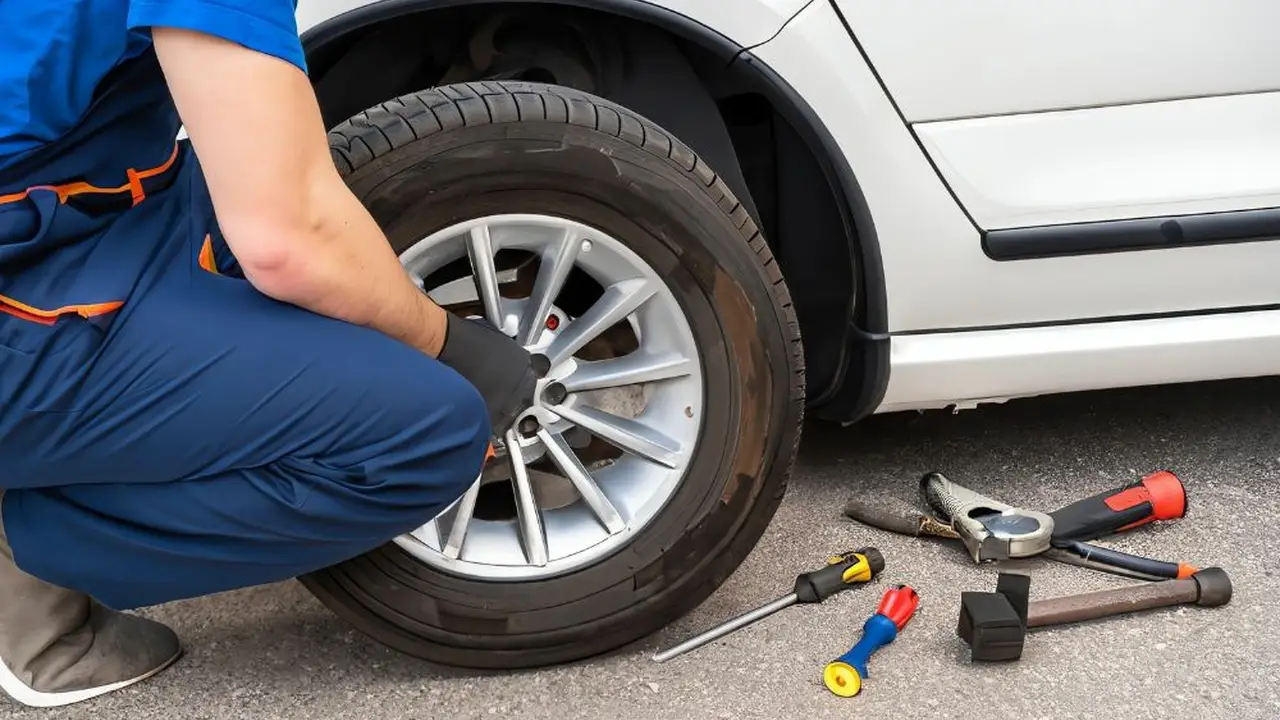
- Tire Repair Kit/Spare Tire: Many EVs come with a tire repair kit instead of a spare. Know how to use it.
- Reflective Triangle/Flares: For roadside breakdowns.
- Flashlight: With extra batteries.
- Warm Blanket/Jacket: In case of a breakdown in cold weather.
- Portable Jump Starter: For your 12V accessory battery, not the main traction battery.
- Snacks and Water: Always a good idea, especially if you get stuck waiting for a charger or roadside assistance.
Driving Strategies for Maximizing EV Range and Efficiency
How you drive has a significant impact on your EV's range. Adopting efficient driving habits can extend your range and reduce charging stops.
Mastering Regenerative Braking and One Pedal Driving
Regenerative braking is an EV superpower. Instead of wasting energy as heat through friction brakes, it converts kinetic energy back into electricity to recharge the battery. Many EVs offer 'one-pedal driving,' where lifting off the accelerator pedal initiates strong regenerative braking, often bringing the car to a complete stop. Mastering this can significantly improve efficiency, especially in stop-and-go traffic or on downhill stretches.
Optimal Speed and Acceleration Techniques
As mentioned, speed is a major range killer. Maintaining a steady, moderate speed (e.g., 65-70 mph on highways) is far more efficient than constantly accelerating and decelerating or driving at very high speeds. Smooth acceleration and gentle braking are key. Avoid jackrabbit starts.
Climate Control Management and Preconditioning
Heating and cooling the cabin consume a lot of energy. Use these strategies to minimize their impact:
- Preconditioning: Heat or cool your car while it's still plugged in at home or a charger. This uses grid power instead of battery power.
- Seat Heaters/Steering Wheel Heaters: These are much more efficient than heating the entire cabin. Use them in cold weather.
- Eco Mode: Many EVs have an 'Eco' driving mode that limits power output and optimizes climate control for maximum efficiency.
On-the-Road EV Charging Etiquette and Troubleshooting
Navigating public charging stations requires a bit of etiquette and knowing how to troubleshoot common issues.
Charging Station Etiquette and Best Practices
- Don't Hog the Charger: Once your car is charged (or you've reached your desired SoC), move it so others can use the charger.
- Be Prepared: Have your payment method ready (app, RFID card).
- Clean Up: Don't leave trash.
- Report Issues: If a charger isn't working, report it to the network provider and on apps like PlugShare.
- Be Patient: Sometimes you might have to wait for a charger.
Common Charging Issues and Troubleshooting Tips
- Charger Not Activating: Try restarting the charger (if there's a button), using a different payment method, or trying an adjacent charger.
- Slow Charging Speed: This could be due to a cold battery, a shared power pedestal, or the charger being throttled. Check your car's display for actual charging rate.
- Cable Not Reaching: Park carefully. If it's a consistent issue, report it to the network.
- App Glitches: Sometimes restarting the app or your phone can resolve connectivity issues.
Recommended EVs for Long-Distance Travel and Their Features
While almost any EV can do a road trip, some are better suited due to their range, charging speed, and comfort features. Here are a few top contenders, keeping in mind the US and Southeast Asian markets.
Tesla Model 3 Long Range and Model Y Long Range
- Range: Model 3 Long Range (approx. 333 miles EPA), Model Y Long Range (approx. 330 miles EPA).
- Charging: Access to the extensive and reliable Tesla Supercharger network, which is increasingly opening to non-Tesla EVs. Superchargers are known for their reliability and ease of use.
- Features: Excellent built-in navigation that plans charging stops, strong performance, comfortable for long drives, and a vast network of service centers.
- Price (US): Model 3 Long Range starts around $47,490; Model Y Long Range starts around $52,490 (prices vary with options and incentives).
- Use Case: Ideal for those prioritizing a seamless charging experience and a well-integrated ecosystem.
Hyundai Ioniq 5 and Kia EV6
- Range: Ioniq 5 Long Range (approx. 303 miles EPA), EV6 Long Range (approx. 310 miles EPA).
- Charging: Both feature 800V architecture, allowing for incredibly fast DC charging (up to 235 kW), meaning 10-80% in about 18 minutes on a capable charger. They use the CCS standard.
- Features: Spacious interiors, comfortable ride, Vehicle-to-Load (V2L) capability (can power external appliances), and distinctive styling.
- Price (US): Ioniq 5 Long Range starts around $45,700; EV6 Long Range starts around $48,700.
- Use Case: Excellent for drivers who want rapid charging and a comfortable, tech-filled cabin.
Ford Mustang Mach-E Extended Range
- Range: Extended Range RWD (approx. 310 miles EPA).
- Charging: Uses the CCS standard, with good charging speeds (up to 150 kW).
- Features: Sporty handling, comfortable seats, large infotainment screen, and a familiar brand experience for many.
- Price (US): Extended Range starts around $54,995.
- Use Case: A great option for those looking for a sporty EV SUV with good range and a strong dealer network.
Porsche Taycan and Audi e-tron GT
- Range: Taycan (approx. 246 miles EPA for base model, higher for others), e-tron GT (approx. 249 miles EPA).
- Charging: Also feature 800V architecture for ultra-fast charging (up to 270 kW), similar to the Hyundai/Kia twins.
- Features: Luxury, performance, and exceptional driving dynamics. While range isn't the absolute highest, their charging speed makes them excellent road trip cars for those prioritizing performance and premium experience.
- Price (US): Taycan starts around $99,400; e-tron GT starts around $106,500.
- Use Case: For the enthusiast who wants a high-performance luxury EV and doesn't mind the premium price tag.
The Future of EV Road Tripping and Infrastructure Growth
The landscape of EV travel is constantly evolving. Understanding future trends can help you plan even better.
Expanding Charging Networks and Reliability Improvements
Governments and private companies are investing heavily in expanding charging infrastructure. The US National Electric Vehicle Infrastructure (NEVI) program aims to build a national network of 500,000 chargers. Southeast Asia is also seeing significant growth, particularly in countries like Thailand, Singapore, and Vietnam. Reliability is also improving as networks mature and technology advances.
Battery Technology Advancements and Longer Ranges
Next-generation batteries (e.g., solid-state batteries) promise even longer ranges, faster charging, and lower costs. This will further reduce range anxiety and make long-distance EV travel even more convenient.
Vehicle-to-Grid (V2G) and Vehicle-to-Load (V2L) Capabilities
V2L, already seen in some EVs like the Ioniq 5 and EV6, allows your car to power external devices, turning it into a mobile power bank. V2G, still in its early stages, could allow your EV to feed power back into the grid, potentially earning you money and supporting grid stability. These technologies could add new dimensions to road tripping, such as powering a campsite or providing backup power.
Long-distance EV travel is no longer a niche activity for early adopters. With careful planning, the right tools, and a few smart driving habits, you can enjoy comfortable, efficient, and environmentally friendly road trips across vast distances. The open road awaits, and your electric vehicle is ready to conquer it.
:max_bytes(150000):strip_icc()/277019-baked-pork-chops-with-cream-of-mushroom-soup-DDMFS-beauty-4x3-BG-7505-5762b731cf30447d9cbbbbbf387beafa.jpg)