Comparing Vehicle to Everything V2X Communication
An overview and comparison of Vehicle-to-Everything V2X communication technologies.
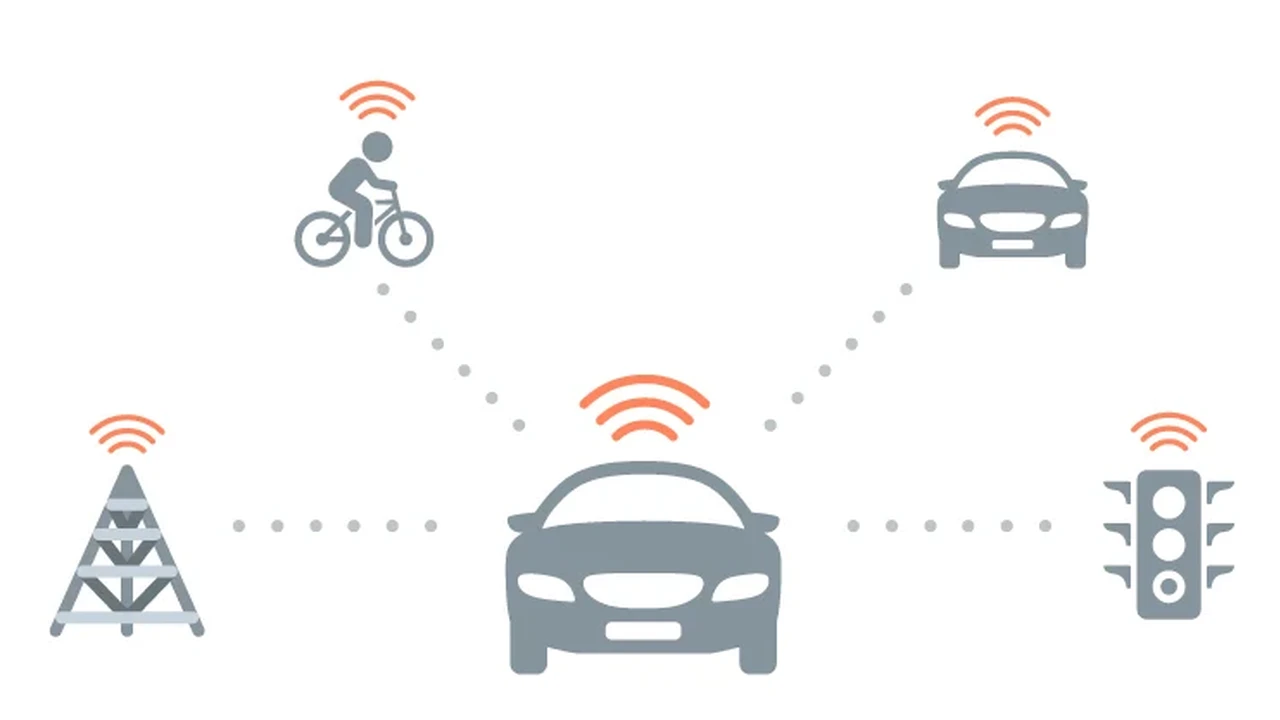
An overview and comparison of Vehicle-to-Everything V2X communication technologies.
Comparing Vehicle to Everything V2X Communication
Hey there, car enthusiasts and tech-savvy drivers! Ever wondered how your car might 'talk' to other cars, traffic lights, or even pedestrians in the future? Well, that's exactly what Vehicle-to-Everything, or V2X communication, is all about. It's a groundbreaking technology designed to make our roads safer, traffic flow smoother, and our driving experience a whole lot smarter. In this deep dive, we're going to break down the different types of V2X, compare their pros and cons, and even look at some real-world applications and products that are already making waves in the US and Southeast Asian markets. So, buckle up!
What is V2X Communication and Why Does it Matter for Automotive Safety and Efficiency?
At its core, V2X communication is a system that allows vehicles to exchange information with various entities in their environment. Think of it as a sophisticated network where your car isn't just a standalone machine but an active participant in a larger, interconnected ecosystem. This constant exchange of data can include everything from speed and location to road conditions and potential hazards. Why is this such a big deal? For starters, it's a game-changer for road safety. Imagine your car knowing about a sudden brake ahead, even if it's around a blind corner, or being warned about a pedestrian stepping into the road before you even see them. That's the power of V2X. Beyond safety, it also promises to significantly improve traffic efficiency by optimizing routes, reducing congestion, and even helping with parking. For both the bustling cities of the US and the rapidly developing urban centers of Southeast Asia, these benefits are immense.
Understanding the Core Components of V2X Vehicle to Everything Technology
V2X isn't just one thing; it's an umbrella term covering several distinct communication types, each with its own role to play. Let's break them down:
Vehicle to Vehicle V2V Communication for Collision Avoidance
V2V is perhaps the most intuitive form of V2X. It's all about cars talking directly to each other. Using short-range wireless signals, vehicles can share critical data like speed, heading, brake status, and even airbag deployment. This real-time information exchange allows cars to detect potential collisions and warn drivers, or even take evasive action autonomously. Imagine a scenario where a car suddenly brakes hard in front of you, but you can't see it due to a large truck. With V2V, your car would receive an immediate alert from the braking vehicle, giving you precious extra seconds to react. This is particularly vital in high-traffic areas common in both American and Southeast Asian cities.
Vehicle to Infrastructure V2I Communication for Smart Traffic Management
V2I involves vehicles communicating with roadside infrastructure, such as traffic lights, road sensors, and electronic signs. This communication can provide drivers with real-time information about traffic conditions, road closures, speed limits, and even optimal speeds to hit green lights. For example, a V2I system could tell your car that the next traffic light is about to turn red, allowing you to adjust your speed smoothly and avoid harsh braking, saving fuel and reducing wear and tear. In Southeast Asia, where traffic congestion is a major issue, V2I could be instrumental in creating more efficient and less frustrating commutes.
Vehicle to Pedestrian V2P Communication for Vulnerable Road User Safety
V2P focuses on protecting vulnerable road users like pedestrians and cyclists. This involves communication between vehicles and personal devices carried by pedestrians or cyclists, such as smartphones or dedicated wearables. If a pedestrian is about to step into the road from behind a parked car, their device could alert an approaching vehicle, and vice versa. This is a huge step forward for urban safety, especially in densely populated areas where pedestrian traffic is high. Imagine a child chasing a ball into the street; V2P could provide a crucial warning to nearby drivers.
Vehicle to Network V2N Communication for Cloud Based Services
V2N connects vehicles to a broader cellular network or cloud-based services. This allows for a wide range of applications, including real-time navigation updates, remote diagnostics, over-the-air software updates, and access to infotainment services. While not directly involved in immediate collision avoidance like V2V, V2N provides the backbone for many advanced features and can indirectly contribute to safety by providing up-to-date information and vehicle health monitoring. Think of it as your car having its own internet connection, constantly pulling in and sending out data to enhance your driving experience.
DSRC vs C-V2X The Battle for V2X Dominance in the Automotive Industry
When it comes to the underlying technology for V2X, there have been two main contenders: Dedicated Short-Range Communication (DSRC) and Cellular V2X (C-V2X). Understanding the differences between these two is crucial for grasping the future of V2X.
Dedicated Short Range Communication DSRC Technology Overview
DSRC is a Wi-Fi-based technology that has been around for a while. It operates on a dedicated spectrum (5.9 GHz in the US) and is designed for direct, low-latency communication between vehicles and infrastructure. Its main advantage is its proven reliability and low latency, making it ideal for safety-critical applications like collision avoidance. Many early V2X deployments and trials, particularly in the US, have utilized DSRC. However, its limitations include a shorter range and the need for dedicated roadside units, which can be costly to deploy widely.
Cellular V2X C-V2X Technology Overview and Advantages
C-V2X, on the other hand, leverages cellular communication technologies, specifically 4G LTE and increasingly 5G. It offers two modes of operation: direct communication (similar to DSRC, but using cellular technology) and network-based communication (V2N). The key advantage of C-V2X is its ability to utilize existing cellular infrastructure, potentially leading to faster and more widespread deployment. It also offers greater range and bandwidth, opening up possibilities for more data-intensive applications. The automotive industry, particularly in recent years, has largely shifted its focus towards C-V2X, seeing it as the more future-proof solution, especially with the advent of 5G's ultra-low latency and high bandwidth capabilities. This is particularly relevant for markets like Southeast Asia, where cellular infrastructure is rapidly expanding.
Comparing DSRC and C-V2X Performance and Deployment Challenges
The debate between DSRC and C-V2X has been intense. DSRC offers robust, direct communication, but its scalability and cost of infrastructure deployment have been hurdles. C-V2X, with its reliance on existing cellular networks, promises broader coverage and more advanced features, but concerns about network latency and reliability in certain scenarios have been raised. However, with 5G, C-V2X is rapidly addressing these concerns. The US has seen a shift in regulatory stance, moving away from mandating DSRC and opening the door for C-V2X. In Southeast Asia, where 5G rollout is a priority, C-V2X is likely to be the dominant technology for V2X implementation.
Real World Applications of V2X Enhancing Driving Experience and Safety
So, how does all this theoretical communication translate into practical benefits for drivers? Let's look at some compelling applications:
Collision Warning Systems and Autonomous Emergency Braking
This is perhaps the most impactful application. V2X can provide advanced warnings for potential collisions, including forward collision warnings, intersection collision warnings, and even blind spot warnings. In some advanced systems, it can even trigger autonomous emergency braking if the driver fails to react. Imagine driving in heavy fog; V2X could 'see' vehicles ahead that your eyes cannot, preventing a multi-car pileup.
Traffic Signal Optimization and Green Light Optimal Speed Advisory GLOSA
V2I communication allows vehicles to receive real-time information from traffic lights. This enables features like Green Light Optimal Speed Advisory (GLOSA), which suggests an optimal speed to pass through upcoming traffic lights without stopping, reducing fuel consumption and emissions. It also helps with traffic flow, especially in urban areas where stop-and-go traffic is a constant headache.
Hazard Warnings and Road Condition Alerts
V2X can alert drivers to various hazards, such as slippery roads due to ice or rain, construction zones, stalled vehicles, or even emergency vehicles approaching. This real-time information allows drivers to adjust their speed and driving behavior proactively, significantly improving safety. For example, if a car ahead hits a patch of black ice, it can immediately broadcast that information to following vehicles.
Parking Space Availability and Smart Parking Solutions
V2X can also help drivers find available parking spaces more efficiently. Vehicles can communicate with smart parking infrastructure to receive real-time information about vacant spots, reducing the time spent circling for parking and easing urban congestion. This is a particularly attractive feature in crowded cities in both the US and Southeast Asia.
Leading V2X Products and Solutions for the US and Southeast Asian Markets
While V2X is still evolving, several companies are already offering products and solutions that integrate this technology. Here are a few examples, keeping in mind that the market is dynamic and new solutions are constantly emerging:
Qualcomm Snapdragon Automotive Cockpit Platforms with C-V2X
Qualcomm is a major player in the C-V2X space, offering its Snapdragon Automotive Cockpit Platforms that integrate C-V2X capabilities. These platforms are designed to power advanced infotainment, telematics, and autonomous driving features, with C-V2X providing the crucial communication layer. Many leading automakers are adopting Qualcomm's solutions for their next-generation vehicles. For example, vehicles from brands like General Motors and BMW are increasingly incorporating Qualcomm's C-V2X modules. These platforms are not standalone products for consumers but rather integrated components within new vehicles. The cost is embedded within the vehicle's overall price, but the value comes from enhanced safety and connectivity features. These are being deployed globally, including in the US and with increasing interest from manufacturers targeting Southeast Asian markets.
Autotalks V2X Chipsets for Aftermarket and OEM Integration
Autotalks is another prominent company specializing in V2X communication chipsets. They offer solutions for both OEM (original equipment manufacturer) integration into new vehicles and aftermarket products. Their chipsets support both DSRC and C-V2X, providing flexibility for different deployment strategies. For instance, their CRATON2 and SECTON chipsets are designed for high-performance V2X communication. While not directly sold to consumers, these chipsets are found in modules that could be integrated into aftermarket V2X devices. An example of an aftermarket application could be a dedicated V2X module that plugs into a vehicle's OBD-II port, providing basic V2V and V2I alerts. Such a device might retail for around $300-$600 USD, depending on features and brand. These are particularly relevant for older vehicles that don't have integrated V2X, offering a pathway to enhanced safety. Autotalks has a strong presence in both US and European markets, and their technology is being explored in Asia.
Kapsch TrafficCom Roadside Units for V2I Deployments
Kapsch TrafficCom is a global leader in intelligent transportation systems, and they offer a range of roadside units (RSUs) that enable V2I communication. These RSUs are installed along roadsides and at intersections to communicate with V2X-equipped vehicles, providing real-time traffic information and managing traffic flow. Their Kapsch RSU 9500 is a prime example, supporting both DSRC and C-V2X. These are infrastructure products, not consumer-facing, and their cost can range from tens of thousands to hundreds of thousands of dollars per unit depending on the complexity and deployment scale. They are crucial for smart city initiatives and are being deployed in various pilot projects and larger-scale rollouts in the US and increasingly in smart city projects across Southeast Asia, such as in Singapore and Malaysia.
Continental V2X Solutions for Integrated Vehicle Systems
Continental, a major automotive supplier, is heavily invested in V2X technology. They offer comprehensive V2X solutions that integrate communication modules, software, and security features into vehicle systems. Their focus is on providing end-to-end solutions for automakers, enabling a wide range of V2X applications. Continental's V2X solutions are integrated into various vehicle models from major manufacturers. For example, their V2X control units are designed to seamlessly integrate with a car's existing electronic architecture. Again, these are OEM components, and their cost is part of the vehicle's manufacturing cost. They are being adopted by global automakers, impacting vehicles sold in the US and Southeast Asia.
Cohda Wireless V2X Software and Hardware Modules
Cohda Wireless is known for its advanced V2X software and hardware modules, particularly for their robust and reliable communication in challenging environments. They provide solutions for both DSRC and C-V2X, focusing on high-performance and secure communication. Their MK5 and MK6 V2X modules are used in various research projects, pilot deployments, and even some commercial applications. These modules can be integrated into vehicles or roadside units. For specialized applications or research, a single module might cost between $1,000 and $3,000 USD. They are actively involved in V2X trials and deployments in the US, Europe, and Australia, with growing interest in Asian markets.
Challenges and Future Outlook for V2X Deployment and Adoption
While the promise of V2X is immense, there are still hurdles to overcome before it becomes a ubiquitous technology.
Standardization and Interoperability Across Manufacturers
One of the biggest challenges is ensuring standardization and interoperability. For V2X to work effectively, vehicles from different manufacturers and infrastructure from various providers need to be able to communicate seamlessly. This requires common standards and protocols, which are still evolving. The global nature of the automotive industry means that agreements need to be reached across continents, which can be a slow process.
Cybersecurity Concerns and Data Privacy in Connected Vehicles
With so much data being exchanged, cybersecurity is a paramount concern. Protecting V2X communications from hacking and ensuring the privacy of driver data are critical for public trust and widespread adoption. Robust encryption and authentication mechanisms are essential to prevent malicious attacks and unauthorized access to sensitive information. Imagine the chaos if traffic signals could be hacked or if personal driving data was compromised.
Infrastructure Deployment Costs and Regulatory Frameworks
Deploying the necessary roadside infrastructure for V2I communication can be expensive, especially for large-scale rollouts. Governments and municipalities need to invest significantly in upgrading existing infrastructure or building new smart infrastructure. Furthermore, clear regulatory frameworks are needed to govern the use of V2X technology, including spectrum allocation, liability in case of accidents, and data governance. Different regions, like the US and various Southeast Asian countries, will need to develop their own specific regulations while striving for global harmonization.
Consumer Acceptance and Awareness of V2X Benefits
Ultimately, the success of V2X depends on consumer acceptance. Drivers need to understand the benefits of the technology and trust its reliability and security. Education and awareness campaigns will be crucial to inform the public about how V2X can make their daily commutes safer and more efficient. As more vehicles come equipped with V2X, and as its benefits become more apparent, consumer demand will naturally increase.
The Road Ahead for V2X Communication in Smart Cities
Despite the challenges, the future of V2X communication looks incredibly promising. As 5G networks become more widespread and autonomous driving technology advances, V2X will play an increasingly vital role in creating truly smart cities and intelligent transportation systems. We'll see more integrated solutions, where vehicles, infrastructure, and even personal devices work together in a cohesive network. The goal is a future with fewer accidents, less congestion, and a more enjoyable and sustainable driving experience for everyone. So, keep an eye out; your car might just start having more conversations than you do!
:max_bytes(150000):strip_icc()/277019-baked-pork-chops-with-cream-of-mushroom-soup-DDMFS-beauty-4x3-BG-7505-5762b731cf30447d9cbbbbbf387beafa.jpg)